


You’re scrolling through a text and someone drops a 🤍 on you. Not the red one, not the purple one — the white heart. And now you’re sitting there wondering if that’s a “we’re just friends” heart or a “I actually really like you” heart.
Fair question, honestly. The white heart emoji has quietly become one of the most-used hearts in texting, and it doesn’t come with a neat little instruction manual. This guide breaks down exactly what it means, how it shifts depending on who sends it and where, and how to use it (or read it) without overthinking your whole group chat.
Quick Answer
The white heart emoji (🤍) generally means pure, calm, or sincere affection — think support, comfort, friendship, or soft romantic feelings, without the intensity of a red heart. It’s less “I’m obsessed with you” and more “I genuinely care about you.” Context, relationship, and platform all shape what it actually means in a given message.
What Does the White Heart Emoji (🤍) Actually Mean?
At its core, 🤍 represents purity, peace, and gentle affection. It’s the emoji version of a soft exhale — less dramatic than a red heart, less mysterious than a black one. People reach for it when they want to show they care without turning up the emotional volume.
That’s exactly why it works in so many situations. A friend can send it after you vent about a rough day. A partner can send it as a quiet “goodnight, I love you.” A stranger on TikTok can drop it under a photo just because the vibe felt soft and clean. The white heart doesn’t demand an explanation — it just says “this mattered to me” in the gentlest way possible.
Where Did the White Heart Emoji Come From?
The white heart officially joined the emoji lineup with Unicode 12.0 in 2019, years after red, blue, purple, and yellow hearts were already everywhere. It filled a real gap: people wanted a heart that felt calm and neutral instead of loud and romantic.
Once platforms like Instagram, TikTok, and Snapchat rolled it out, it quickly attached itself to “soft” aesthetics — minimalist photo grids, all-white outfits, wedding posts, and gentle, healing-focused captions. It didn’t take long for the emoji to outgrow its literal color and become shorthand for a whole emotional tone: quiet, sincere, and unbothered by drama.
White Heart Emoji Meaning in Texting
In a regular text thread, 🤍 usually softens whatever you just said. It’s less about romance and more about tone — it tells the other person “I mean this kindly.”
Real examples:
- “Good luck at your interview today 🤍”
- “I’m really proud of you 🤍”
- “Thanks for listening earlier 🤍”
Notice none of these are romantic on their own. They’re warm, but not flirty — which is exactly the point. The white heart lets you express real care in a text without it reading as a big declaration. It’s the emoji equivalent of a gentle hand on the shoulder rather than a hug that lasts a little too long.
White Heart Meaning in a Relationship
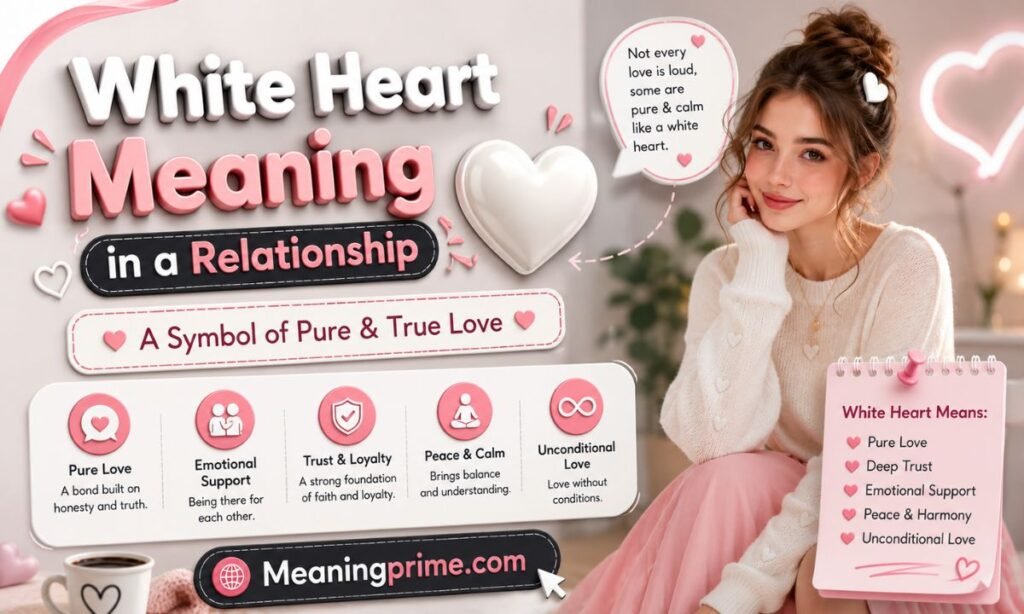
Inside a romantic relationship, the white heart usually shows up during the calmer, more tender moments — not the passionate ones. Think bedtime texts, quiet reassurance, or “just thinking of you” messages rather than big romantic gestures.
A red heart might show up after a date that went incredibly well. A white heart is more likely to show up the next morning, in a simple “hope you slept okay 🤍.” Couples often use it as their “soft love” heart — the one reserved for comfort, trust, and stability rather than butterflies. It doesn’t replace the red heart; it just covers a different emotional register.
White Heart Emoji Meaning from a Guy
When a guy sends a white heart, it’s usually not about intensity — it’s about sincerity. Guys who aren’t naturally big on grand romantic language often lean on 🤍 because it feels safe: caring, but not over-the-top.
From a guy, it can mean genuine affection, quiet support, or a soft way of saying “I like you” without going full red-heart declaration. Context is everything here, though. A white heart after “goodnight” or “take care of yourself” leans romantic or protective. A white heart on a random meme you sent him usually just means “this was sweet,” nothing deeper. The emoji itself is gentle — the meaning still depends on what came before it.
White Heart Emoji in a Breakup or “It’s Over” Moment
This is where the white heart gets interesting. In breakup conversations, people often switch from red to white hearts on purpose. It’s a subtle way of saying “the romantic love is done, but I still care about you.”
Examples that show this shift:
- “I hope you find happiness 🤍”
- “No hard feelings, take care 🤍”
- “I’ll always care about you 🤍”
It reads as closure without bitterness — peace instead of passion. If someone downgrades from ❤️ to 🤍 during a breakup, they’re usually not being cold; they’re trying to end things gently instead of pretending nothing changed.
White Heart Emoji Meaning on WhatsApp
On WhatsApp, the white heart tends to stay close to its original meaning: sincere support and calm affection. Since WhatsApp is often used for closer, more personal conversations — family, close friends, partners — the emoji shows up in messages like “take care 🤍” or “proud of you 🤍” more than in flashy captions.
Because WhatsApp skews toward one-on-one, real conversations rather than public posts, the white heart there usually carries genuine emotional weight. It’s less about aesthetics and more about actually meaning what you typed. If someone sends it to you on WhatsApp after a tough conversation, they’re probably telling you they’ve got your back.
White Heart Emoji Meaning on TikTok & Instagram
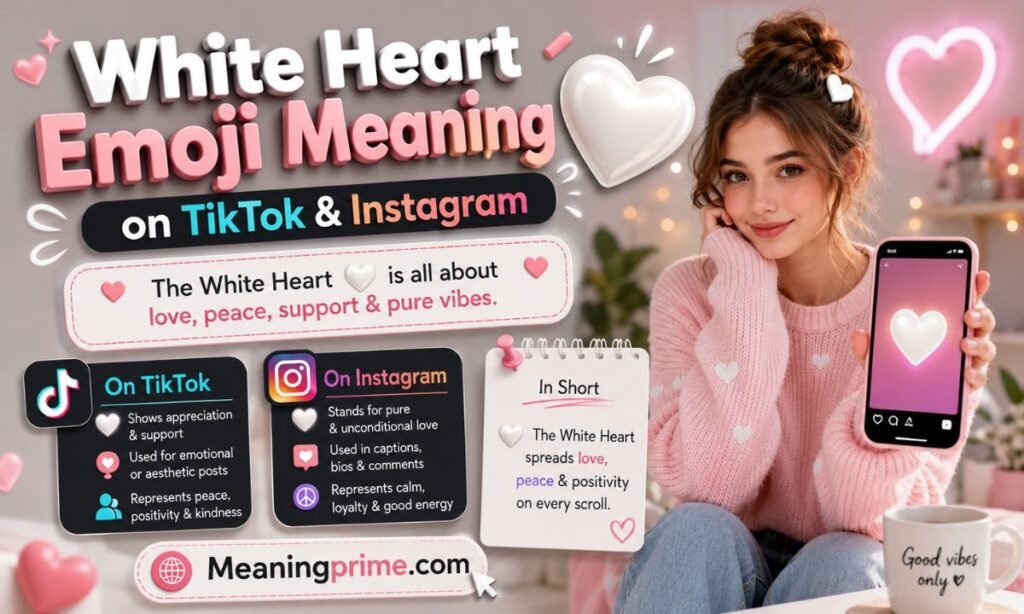
On TikTok and Instagram, the white heart leans harder into aesthetic and emotional branding. It shows up in captions about healing, soft-girl or soft-boy content, minimalist photo dumps, and “peace and love” style posts.
Common contexts you’ll spot it in:
- Aesthetic white-and-neutral photo captions
- “Healing isn’t linear 🤍” style quote posts
- Wedding, engagement, or milestone announcements
- Friendship or best-friend edit videos
Here, the emoji often says less about a specific person and more about a mood — calm, wholesome, put-together. It’s become almost a visual cue, matching whatever soft, clean aesthetic the post is going for.
White Heart Emoji Meaning on Snapchat
Snapchat is a little different because hearts there sometimes tie into streaks and relationship emojis, not just the ones you type yourself. A white heart you send manually still means the same general thing — warmth, support, closeness — but it hasn’t been claimed by Snapchat’s official streak-emoji system the way red and yellow hearts have.
So on Snapchat, a white heart is usually a personal choice rather than an automatic label. If a friend sends you 🤍 in a snap or caption, it’s them intentionally choosing a softer heart over the more common red or yellow ones — which often makes it feel more sincere, since they picked it on purpose.
White Heart Emoji Meaning vs Red (🤍 vs ❤️)
The color difference isn’t just visual — it’s emotional. Red says “big feelings, right now.” White says “steady feelings, always.”
| 🤍 White Heart | ❤️ Red Heart | |
| Tone | Calm, gentle | Passionate, intense |
| Best for | Support, soft love, friendship | Romantic love, strong emotion |
| Common in | Comfort texts, aesthetic posts | Valentine’s Day, declarations |
| Feels like | A quiet hug | A big “I love you” |
People often use both in the same relationship, just for different moments. Red for the exciting stuff, white for the steady, reassuring stuff. Neither one is “less than” the other — they just carry different emotional volumes.
White Heart Emoji Meaning on Reddit

On Reddit, white heart discussions pop up a lot in relationship and dating subreddits, usually with someone asking, “does this mean they like me?” The general consensus across those threads lines up with everything above: white heart reads as caring but not necessarily romantic, and people should look at the full conversation, not just the emoji.
A recurring theme in these discussions is that context always wins the argument. Redditors regularly point out that the same white heart can mean “I love you” from a partner or “thanks, that’s kind” from an acquaintance — and that trying to decode a single emoji without reading the rest of the message almost always leads to overthinking something simple.
White Heart in Grief, Support, and Mental Health Chats
The white heart shows up a lot in harder conversations too — grief, loss, tough days, and mental health check-ins. It works well here because it doesn’t feel heavy or performative; it just quietly says “I’m with you.”
Gentle examples people actually send:
- “Thinking of you today 🤍”
- “Healing takes time, be patient with yourself 🤍”
- “Here if you need anything 🤍”
In some cultures, white is also associated with mourning rather than purity, so the white heart naturally fits into remembrance posts and messages of condolence too. It’s one of the few emojis that feels appropriate in both a comforting text and a genuinely sad one — soft enough to not feel out of place either way.
How to Type or Copy the White Heart Emoji
Getting the actual emoji onto your screen takes ten seconds once you know where to look.
- iPhone: Open your keyboard, tap the globe/emoji icon, search “white heart”
- Android: Tap the emoji icon on your keyboard, search “white heart”
- Windows: Press Windows key + . (period), search “white heart”
- Mac: Press Control + Command + Space, search “white heart”
- Anywhere else: Just copy this — 🤍 — and paste it in
Once it’s in your keyboard’s recent emoji row, it’ll stay easy to find for next time. No app downloads, no weird workarounds — just a quick search away on every major device.
When to Use (and Skip) the White Heart Emoji
The white heart is genuinely one of the safest emojis to send, but that doesn’t mean it fits everywhere. Knowing when to reach for it — and when not to — keeps your texts landing the way you actually mean them.
Good times to use it: encouraging a friend, comforting someone, soft romantic check-ins, aesthetic captions, condolences. Times to skip it: when you want to be unmistakably romantic (red heart does that job better), or in a message that needs to feel urgent or high-energy, since the white heart’s whole vibe is calm. Basically, if the moment calls for warmth without drama, 🤍 is your emoji.
Frequently Asked Questions
What does 🤍 mean for a girl?
It usually signals genuine care, comfort, or soft affection — romantic or platonic depending on who she’s talking to.
What if a girl sends 🤍?
It’s likely a sign of sincere affection or support; check the rest of the conversation for romantic vs. friendly context.
What does a 💜 mean?
The purple heart typically represents loyalty, admiration, or deep non-romantic affection, and is also linked to the U.S. military honor.
What’s the difference between 🤍 and ❤️?
🤍 feels calm and supportive; ❤️ feels passionate and directly romantic.
Is the white heart emoji romantic or just friendly?
It can be either — it’s romantic in couple conversations and friendly in most other contexts.
Is white heart emoji used for mourning?
Yes, especially in cultures where white symbolizes mourning, it’s commonly used in remembrance or condolence messages.
What’s the difference between 🤍 and ♡ (outline heart)?
🤍 is the official filled Unicode emoji; ♡ is usually a text symbol or font character, not a true emoji.
Why do people use white hearts instead of red hearts?
To express care without the intensity or romantic pressure that a red heart usually carries.
Conclusion
At the end of the day, the white heart emoji isn’t complicated once you strip away the overthinking — it’s a soft, sincere way to show someone you care, without cranking the emotional intensity up to red-heart levels. Whether it shows up in a WhatsApp message, a TikTok caption, or a quiet “goodnight 🤍” from someone you’re dating, its meaning almost always traces back to comfort, calm, and genuine affection.
The real trick isn’t memorizing every possible use case — it’s paying attention to who sent it and what the rest of the conversation sounds like. Read the room, not just the emoji, and you’ll almost never get it wrong. And now that you know exactly what 🤍 is saying, you can send it (or read it) with a lot more confidence next time it pops up.