

You’ve probably heard someone drop “paisa” in a text, a TikTok comment, or across the counter at a taquería — and depending on who said it, it sounded like either a warm hug or a tiny jab. That’s the thing about this word: the dictionary definition barely matters. Tone does the heavy lifting.
Short version: “paisa” comes from paisano (fellow countryman), and today it swings anywhere from “hey, my guy from back home” to a light poke at someone a little too rancho for the room. Here’s exactly when it’s which.
Quick Answer
“Paisa” is short for paisano, meaning someone from the same hometown, region, or country. In Mexican and Mexican-American slang, it’s used both as a warm term for a fellow Mexican (especially an immigrant staying close to tradition) and, depending on tone, as a light tease implying someone is unpolished, “fresh off the rancho,” or overly traditional. Context and delivery decide which one you’re getting.
Where “Paisa” Actually Comes From
“Paisa” is just the clipped version of paisano — same energy as how “gonna” is the clipped version of “going to.” Paisano traces back to país (country), so at its root it means “someone from my country or town.”
Mexicans have used paisano for generations, especially between strangers who instantly clock each other as being from the same place. “Paisa” is just the shortcut version your uncle or a stranger in line at the panadería actually says out loud.
Paisa Meaning in English
If you had to translate it cleanly, “paisa” lands somewhere between countryman, homie from back home, and fellow Mexican. None of those fully capture it — English doesn’t really have one word that carries both the “we’re from the same place” solidarity and the cultural-identity weight paisa can have. It sits closest to “compatriot,” just a lot warmer.
What Paisa Means Today — It’s Not Just One Thing
This is where most guides oversimplify. Paisa isn’t one fixed vibe — it moves along a spectrum depending on tone, relationship, and setting.
The Warm, In-Group Version
Between Mexican immigrants who just met, “paisa” is instant solidarity — a nod that says I see you, we’re from the same place, we’ve got each other’s back. Two guys working construction who realize they’re both from Michoacán might start calling each other paisa within five minutes.
The Neutral, “Just Describing Someone” Version
Sometimes it’s genuinely just descriptive — no judgment attached. “Ese señor es paisa, llegó hace poco de Guanajuato” (that guy’s a paisa, he got here recently from Guanajuato) is just stating a fact, the same way you’d mention someone’s hometown.
The Playful Tease
Among friends, calling someone “paisa” can be light ribbing — teasing them for being a little too traditional, too into ranchera music, too quick to say “ándale” unironically. It’s affectionate, not mean.
When It Turns Into Shade
Here’s the part competitors skip: paisa can absolutely be used to talk down. Among more assimilated or U.S.-born Mexicans, calling someone “paisa” — especially with an eye-roll — can imply they’re unpolished, stuck in a rancho mindset, or “too Mexican” for the room. Ugly when it’s meant that way, but it happens.
Paisa on Urban Dictionary — What the Internet Says
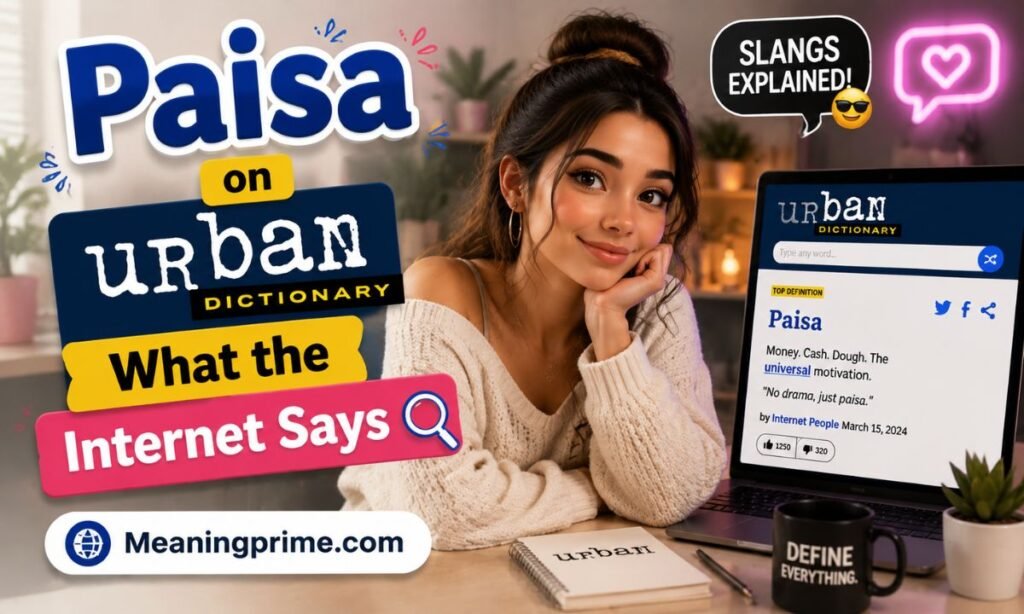
Urban Dictionary’s crowd-sourced entries mostly agree it’s short for paisano, used when you clock a stranger as a fellow Mexican or Hispanic. Scroll further, though, and you’ll find entries describing the cowboy-hat, ostrich-boot stereotype too — proof the word carries a visual caricature alongside its friendlier meaning. Like most crowd-sourced dictionaries, take the spicier entries with a grain of salt.
Who Says “Paisa” (and Who Doesn’t)
Northern Mexico vs. Central/Southern Mexico
You’ll hear “paisa” used casually as a friendly address (“Oye, paisa, ¿qué transa?”) more in northern states, where it functions almost like “bro” or “man.” Further south, it leans more toward its literal meaning — actually noting someone’s from the same region — rather than a catch-all greeting.
Mexican Immigrant Communities in the U.S.
This is where “paisa” carries the most weight. Among first-generation immigrants, it’s a quiet form of solidarity — a word that says we’re both far from home, and that connects us. It shows up constantly in workplaces, church groups, and neighborhoods with tight-knit Mexican communities.
Older Generation vs. Gen Z / Millennials
Older, working-class speakers tend to use paisa earnestly and often — it’s just how they talk. Younger Mexican-Americans use it more selectively, sometimes ironically, sometimes as the teasing version above, and increasingly mixed into Spanglish (“bro is such a paisa, still rocking the botas”).
What Does “Paisa Girl” Mean?

“Paisa girl” describes a young woman who leans into her Mexican roots hard — speaking Spanish at home, into traditional music and dress, close with family, unbothered by trends that clash with her culture. Among friends it’s usually a compliment, a nod to someone being proudly, unapologetically herself.
It can also get used sarcastically to imply someone’s a little too old-school or hasn’t “modernized” — same double-edge as the word itself.
Paisa vs. Chicano (and Where Pocho and Paisano Fit In)
People mix these up constantly, so here’s the cheat sheet:
| Term | Who It Describes | Vibe |
| Paisa | Someone from Mexico, often a recent immigrant, closely tied to traditional customs | Homeland-focused, Spanish-dominant |
| Paisano | The full, formal version of paisa — fellow countryman | Neutral, respectful |
| Chicano | A Mexican-American, usually U.S.-born, with a distinct bicultural identity tied to the Chicano civil rights movement | Proud, political, bicultural |
| Pocho | A Mexican-American perceived as having lost touch with Spanish or Mexican culture | Can be teasing or mildly insulting, depending on who’s using it |
The short version: paisa points toward Mexico, Chicano points toward a U.S.-born Mexican-American identity, and pocho is basically the Spanish-speaking world’s version of “you’ve gone too American.” None of these are insults by default — all of them can become one depending on tone.
The “Paisa Look” — Why It’s Tied to an Aesthetic
Part of why “paisa” carries baggage is that it’s attached to a very specific look in the popular imagination: cowboy hat, big belt buckle, boots, maybe a gold chain with a Virgen de Guadalupe pendant. That aesthetic is real and plenty of people rock it proudly — but it’s also the version that gets exaggerated into a punchline online, which is where a lot of the word’s teasing edge comes from.
Paisa Spanish Pronunciation
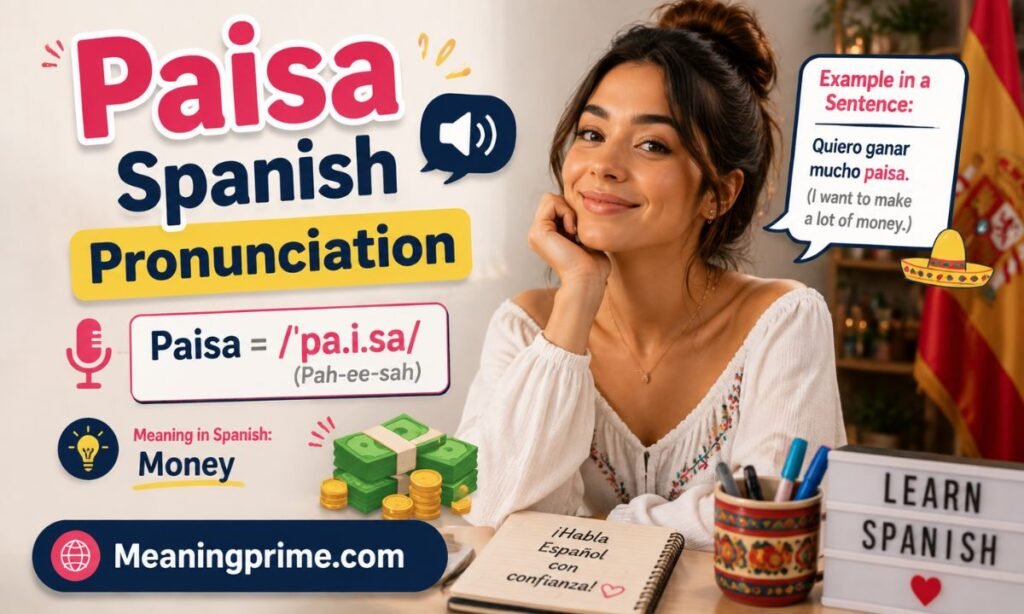
It’s pronounced PIE-sah — rhymes with “pie” plus “sah.” Stress falls on the first syllable: PAI-sa. Simple, two syllables, no surprises once you hear it once.
“Piesa” — Is That Even a Word?
Nope — “piesa” isn’t a real Spanish word, it’s just a common misspelling people type when they’re going off how the word sounds instead of how it’s actually spelled. If you see “piesa” floating around in a comment section or meme, they mean paisa.
What Reddit and Real Bilingual Speakers Say About Paisa
Ask around Spanish-language forums and Reddit threads, and the answers cluster into the same two camps this article’s been describing: plenty of people say it’s simply what they call fellow Mexicans, no judgment attached. Others admit it’s used to clown someone for seeming too fresh off the rancho. Everyone seems to agree on one thing — you can tell instantly from tone which version you’re getting.
Real Conversation Examples
Warm/in-group:
“¿Y tú de dónde eres?” “De Zacatecas, ¿y tú?” “¡No manches, yo también! Qué bueno encontrar un paisa por aquí.”
Neutral:
“Who’s the new guy on the crew?” “He’s a paisa, just got here from Puebla a few months ago.”
Playful tease:
“Bro put his cowboy hat on for the club again.” “Lol he’s so paisa, I love him for it.”
Shade:
“She said his accent was ‘so paisa’ and kind of laughed.” “Yeah… that one wasn’t a compliment.”
Can Non-Mexicans/Non-Latinos Say “Paisa”?
Generally, tread carefully. If you’re not Mexican and you use “paisa” to describe someone, you’re stepping into a word that carries real in-group weight — it can come across as mimicking a solidarity you’re not actually part of. It’s very different from a Mexican person using it about another Mexican person. If you’re close friends and it’s genuinely affectionate and mutual, it can land fine — but it’s not a word to casually toss around with someone you just met.
A Quick Note on “Paisa” in Colombia and Italy (Different Roots, Same Sound)
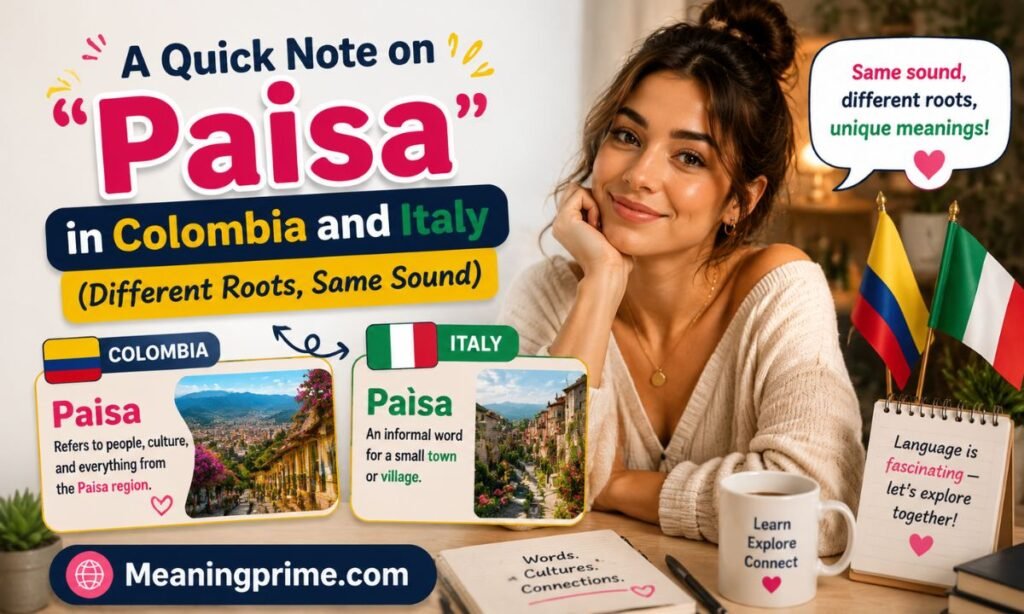
Quick disambiguation since it trips people up in search results: in Colombia, “Paisa” refers to people from Antioquia and the surrounding coffee-growing region — a completely different regional identity, unrelated to the Mexican slang meaning beyond sharing the same paisano root. And in Italian, paisà comes from paese (village/country) and simply means “friend” or “fellow villager,” brought to the U.S. by Italian immigrants generations ago. Same linguistic ancestor, three very different cultural lives.
How to Use It Without Sounding Off
Listen before you lead. If people around you are already using “paisa” warmly, mirror that tone. If you’re unsure whether it’ll land as friendly or as a tease, don’t use it on someone you don’t know well. It works because it’s earned through familiarity, not because you memorized a slang guide.
Frequently Asked Questions
What does “paisa” mean in Mexican slang?
It’s short for paisano, meaning someone from the same hometown, region, or country — used both as a warm term for fellow Mexicans and, depending on tone, as a light tease.
Is calling someone “paisa” an insult?
Not by default. It’s usually friendly or neutral, but it can be used to mock someone as unpolished or overly traditional depending on tone and delivery.
What’s the difference between paisa and paisano?
They’re essentially the same word — paisa is just the shortened, more casual version of the full word paisano.
Is paisa the same as Chicano?
No. Paisa usually points toward someone from Mexico or closely tied to Mexican customs, while Chicano describes a U.S.-born Mexican-American identity with its own distinct cultural and political history.
Do younger Mexican-Americans still use “paisa”?
Yes, though often more selectively than older generations — sometimes earnestly, sometimes as playful teasing, frequently mixed into Spanglish.
Is “paisa” used the same way in Colombia?
No. In Colombia, “Paisa” refers to people from the Antioquia region, a regional identity unrelated to the Mexican slang meaning.
What are paisa girls?
Young women who strongly embrace their Mexican heritage — language, traditions, music, and family closeness — usually said as a compliment among friends.
What is Mexican slang for a thick girl?
Terms like bien buena or está buenota come up casually among friends, though they’re informal and best used carefully depending on the setting.
What is some Mexican slang?
Beyond paisa, common everyday terms include güey (dude), chido (cool), neta (really/for real), and no manches (no way).
What is a paisita?
“Paisita” is an affectionate diminutive of paisa — a softer, cuter way of saying it, often used between close friends or with genuine warmth.
Conclusion
Paisa proves a single word can hold two completely different meanings at once — the only way to know which one you’re hearing is to pay attention to who’s talking and how.
Next time it comes up, whether it’s warm, neutral, or a little pointed, you’ll know exactly what’s being said between the lines.