

You saw “PPTO” on your paystub, in your employee portal, or in a group chat with coworkers, and now you’re stuck. Nobody actually explained it to you. You just called out sick, tapped a button, and hoped for the best — and now you’re wondering if that button just saved you from a write-up or made things worse.
That confusion is normal, and you’re not the only one googling this mid-shift. This guide breaks down exactly what PPTO means, how it’s different from regular PTO, and how it actually plays out when you’re the one who needs to use it.
Quick Answer
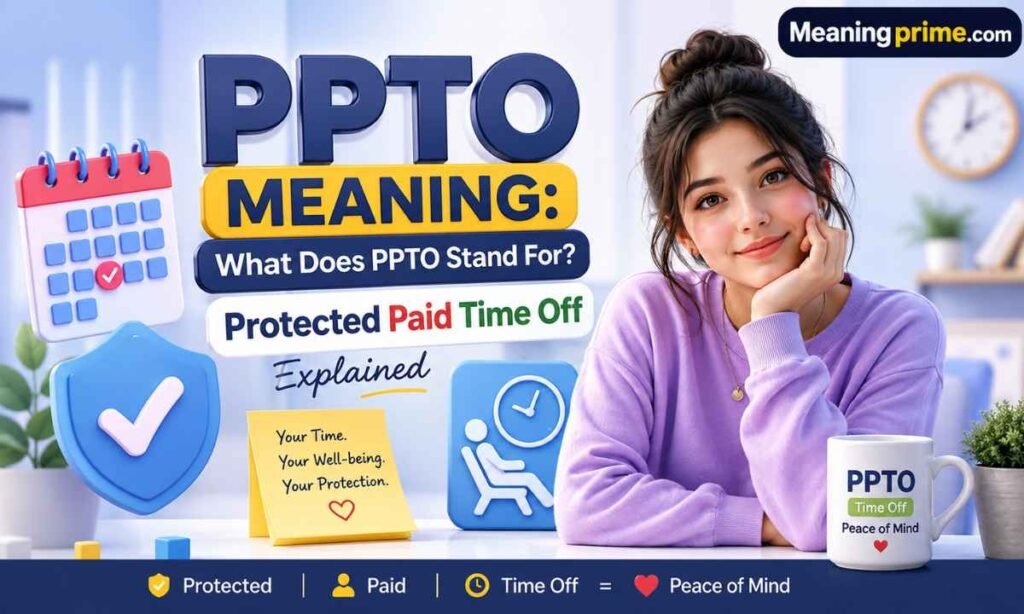
PPTO stands for Protected Paid Time Off. It’s paid leave that, when used correctly, can also shield you from attendance points or disciplinary action for an absence. The short version: PTO pays you for time off — PPTO pays you and protects your attendance record.
PPTO Meaning Explained: What Does PPTO Stand For?
PPTO stands for Protected Paid Time Off. Break the acronym down letter by letter and it’s straightforward:
- P – Protected
- P – Paid
- T – Time
- O – Off
The word doing all the heavy lifting here is “Protected.” Regular paid time off just means you get paid while you’re away from work. PPTO adds a second layer: if your absence qualifies and you apply your PPTO hours correctly, your employer treats that absence as excused instead of counting it against you.
This isn’t internet slang or a texting abbreviation. It’s a human resources and payroll term, and it shows up most often at large employers — retail chains, warehouses, and distribution centers — where attendance is tracked closely and missing a shift without coverage can trigger real consequences.
Is PPTO the Same as “Paid Personal Time Off”? Clearing Up the Confusion
If you’ve searched around, you may have run into a different definition — one that claims PPTO stands for “Paid Personal Time Off.” That’s incorrect, and it’s worth clearing up because it changes what the benefit actually does for you.
“Paid Personal Time Off” implies a flexible bucket of hours for whatever you want, no strings attached. That’s not what PPTO is. The whole point of PPTO is the attendance protection piece — without it, you’re really just describing regular PTO with a different name.
So if you see an article or a coworker say PPTO means “personal” time off, take it with a grain of salt. The accurate, standard definition — the one used by HR departments and payroll systems — is Protected Paid Time Off.
Why Do People Search for “PPTO Meaning”?
Most people land on this term during onboarding, a training session, or the moment they actually need to call out. Then the questions start piling up fast:
- What does PPTO mean?
- Is PPTO different from regular PTO?
- Can PPTO stop me from getting an occurrence or attendance point?
- How do I actually use it?
- Does it expire?
- How much do I even have?
Since every employer writes its own version of this policy, workers usually search the general concept first, then dig into their specific company’s handbook or app for the exact numbers.
PPTO Meaning at Work — Explained in Simple Words
Picture this: you wake up with a fever. Normally, missing a shift like that could mean an attendance point, a note in your file, or worse if it keeps happening.But if you’ve got PPTO hours sitting in your account and you apply them the right way, that absence gets protected.
You still get paid for the missed time, and — depending on your employer’s policy — that occurrence either gets reduced or wiped out entirely.That protection piece is the entire reason PPTO exists as a separate category instead of just being folded into standard PTO.
Is PPTO an Acronym or Just a Short Form?
Both, really. PPTO is a genuine acronym — each letter stands for a specific word (Protected, Paid, Time, Off) — and it also functions as convenient shorthand that HR systems, payroll software, and employee apps use because typing out “Protected Paid Time Off” every time would clutter every screen and paystub.
Is PPTO Internet Slang?
No. This one trips people up because it looks like it belongs in the same family as texting abbreviations, but it doesn’t work the same way at all.
Compare it to something like LOL, BRB, or TY. Those replace entire phrases and get dropped into casual conversation with no formal meaning behind them. PPTO is the opposite — it’s a defined workplace benefit with actual payroll and HR implications behind it. You won’t find it in a slang dictionary next to internet abbreviations, because it isn’t one.
Is PPTO Used on TikTok, Snapchat, Instagram, or WhatsApp?
Not as slang, but yes, people talk about it there constantly — just not the way they’d use an emoji or a meme reference. A typical example looks like this:
“Used my PPTO today because I woke up feeling awful.”
That’s someone discussing a real workplace benefit on a social app, not coining new slang. You’ll see this kind of post a lot on TikTok and Reddit, especially from retail and warehouse workers comparing notes on how their employer’s policy actually works.
How PPTO Works, Step by Step
Every employer tweaks the details, but the general flow looks pretty similar across companies that offer this benefit.
Step 1: You Earn PPTO Over Time
Most employers let PPTO accrue starting on your date of hire, based on hours worked, your employment classification (full-time, part-time, or temporary), and how long you’ve been with the company. Some large employers cap accrual around 30 hours a year for hourly workers, though your specific rate depends entirely on your employer’s plan.
Step 2: An Unplanned Absence Happens
Life doesn’t check your work schedule first. Illness, a family emergency, car trouble, a last-minute childcare gap — these are the situations PPTO is built for.
Step 3: You Apply PPTO to Cover It
You submit the request through whatever system your employer uses — a scheduling app, an employee portal, or an HR platform. Many companies give you a short window (often about a week) after the absence to enter it and have it count toward protection.
Step 4: Attendance Protection Kicks In
If you had enough PPTO hours to cover the missed time and followed the process correctly, the absence gets excused instead of logged against you. If you only had partial hours available, some of the time may still be covered by regular PTO instead, which usually isn’t protected the same way.
PPTO Meaning vs. PTO: What’s the Real Difference?
This is the question almost everyone eventually asks, so here’s the side-by-side breakdown.
| Feature | PTO | PPTO |
| You get paid for the time | Yes | Yes |
| Works for planned vacation | Yes | Sometimes, if no PTO is left |
| Covers unplanned absences | Sometimes | Usually, yes |
| Protects against attendance points | Typically no | Typically yes |
| Requires advance approval | Usually | Not for emergencies |
| Availability | Nearly universal | Employer-specific |
The short version: PTO gets you paid. PPTO gets you paid and keeps an unexpected absence from turning into a mark on your record.
What Happens When Your PPTO Runs Out?
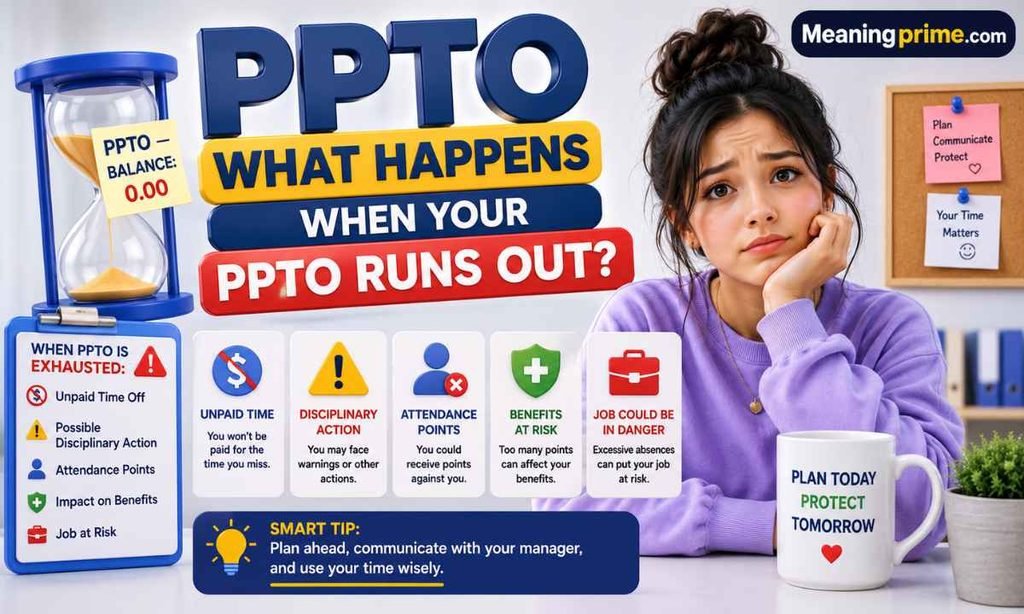
This is a gap most explainers skip, and it matters. If you don’t have enough PPTO hours to cover the entire absence, your employer’s system will typically pull the remaining balance from your regular PTO automatically. The catch is that only the portion covered by PPTO gets protected — the part paid out of regular PTO can still count as an occurrence, depending on your attendance policy.
That’s why a lot of workers try to save a small PPTO cushion for genuine emergencies rather than burning through it on planned time off, even when their employer technically allows it for both.
Real-Life Examples of Using PPTO
The sick day. You wake up running a fever. Instead of taking an unexcused absence, you log your available PPTO hours and the day gets covered without an attendance mark.
The family emergency. Your kid’s school calls mid-shift and you need to leave immediately. You clock out early and apply PPTO for the remaining hours on your schedule.
The car trouble. Your car won’t start and there’s no backup plan. You’re not making it in, so you submit PPTO to cover the missed shift.
The surprise appointment. A doctor’s office fits you in last minute. You use a few hours of PPTO to cover the gap instead of taking unpaid time.
What PPTO Sounds Like in Real Conversations
Since it’s not slang, the tone around PPTO stays pretty grounded — but how people bring it up still varies depending on the situation.
Straightforward: Manager: “Did you get your PPTO submitted?” Employee: “Yeah, entered it this morning.”
Stressed: Employee: “My car died on me.” Coworker: “At least you’ve still got PPTO left.”
A little sarcastic: Employee: “Another mandatory meeting on my day off?” Coworker: “Wish PPTO covered those too.”
Supportive: Coworker: “Heard you had to leave early. Everything okay?” Employee: “Yeah, just used some PPTO to handle it.”
PPTO Meaning at Walmart: Why the Term Is So Common There
If you searched this term because you saw it at work, there’s a decent chance you work for Walmart — it’s one of the largest employers using this exact acronym, and a huge share of search traffic around “PPTO meaning” traces back to Walmart associates trying to understand their benefits.
At Walmart, hourly associates earn time off in two separate buckets: regular PTO and Protected PTO. PPTO functions as Walmart’s version of paid sick leave, including in locations where local law doesn’t otherwise require it. Full-time, part-time, and even temporary hourly associates can earn it, though temporary workers are generally limited to using it for sick time, family care, or approved parental leave. Associates typically get about a week after an absence to submit PPTO and have it applied toward attendance protection.
This doesn’t mean PPTO is exclusive to Walmart — other large retailers and warehouse employers use similar systems under different names — but Walmart’s scale is a big reason the term shows up so often in searches and social posts.
PPTO vs. Similar Workplace Terms
People frequently mix PPTO up with other leave categories, so here’s how it stacks up against the terms it gets confused with most.
| Term | What It Means | Typical Use |
| PPTO | Protected Paid Time Off | Unplanned absences with attendance protection |
| PTO | Paid Time Off | General vacation and leave |
| Sick Leave | Paid leave specifically for illness | Health-related absences |
| Personal Leave | Time off for personal reasons | Varies by employer |
| Vacation Time | Planned, scheduled time away | Travel and leisure |
| Unpaid Leave | Time off without compensation | Extended absences beyond available PTO/PPTO |
Why Employers Offer PPTO
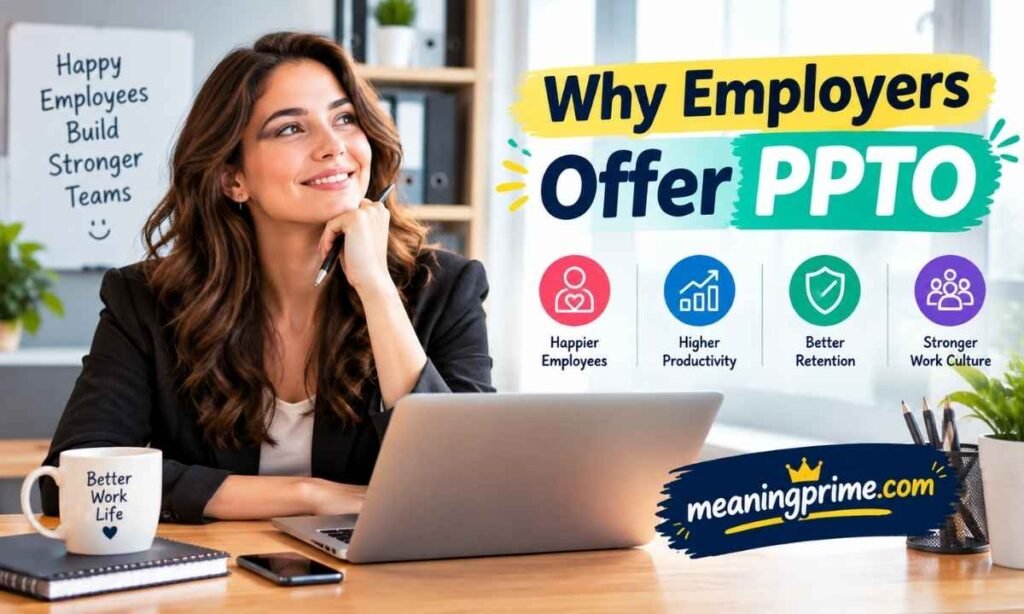
Life happens, and no scheduling system accounts for a sick kid or a dead car battery. Without some form of attendance protection, employees often feel pressured to show up anyway — which isn’t good for anyone, including the business.
PPTO gives employers a way to balance a few competing priorities: keeping shifts covered, holding people accountable for chronic no-shows, and still giving workers room to handle real emergencies without fear of losing their job over one bad week. Done well, it tends to reduce burnout and cut down on people working sick, which benefits the whole team.
Where Did PPTO Come From?
The concept grew out of older attendance-point systems that didn’t distinguish between someone skipping a shift and someone dealing with a genuine emergency. Employees could rack up penalties even for legitimate, unavoidable absences, which created a lot of friction and resentment.
As companies moved to digital scheduling and time-tracking software, many introduced a protected category specifically to fix that gap — paid leave that also shields your record when life gets in the way. The acronym PPTO caught on as these systems spread across large employers, and it’s now firmly part of everyday workplace vocabulary.
What People Say About PPTO on Reddit and TikTok

Search “PPTO” on Reddit or TikTok and you’ll find a steady stream of real workers comparing notes — mostly retail and warehouse employees swapping tips on how their employer’s PPTO system actually works in practice, since official handbooks don’t always explain it clearly.
Common threads include how many hours people are earning, whether unused PPTO carries over into the next year, and stories about PPTO saving someone from an attendance write-up at the last minute. It’s less “meme culture” and more crowdsourced HR advice, which says a lot about how confusing official policy language can be for the people actually using the benefit.
Who Actually Uses PPTO?
PPTO isn’t tied to a particular generation — it’s tied to job type. You’ll find it most often among hourly retail employees, warehouse and distribution workers, and corporate associates at companies large enough to run formal attendance-tracking systems.
Gen Z workers often encounter the term for the first time during their very first job, while Millennials and older employees are more likely to already understand it from years of working under similar systems. Geographically, it’s overwhelmingly a U.S. workplace term, tied closely to large national employers rather than small businesses, which more commonly stick to a simple combined PTO bank.
Quick Yes-or-No Questions About PPTO
Is PPTO rude to bring up? No — it’s a standard HR term, completely appropriate in any work conversation.
Is PPTO a bad word? Not even close. It shows up in official handbooks, payroll systems, and HR documentation.
Can you use PPTO at school? Not really — PPTO is an employment benefit, not something tied to academic attendance.
Is PPTO appropriate in the office? Absolutely — it’s most commonly discussed in exactly that setting.
PPTO and Workplace Culture

PPTO reflects a broader change in how employers think about attendance. Instead of treating every absence the same, more companies are drawing a line between someone who’s genuinely dealing with an emergency and someone who’s just skipping shifts.
That shift matters for morale. When employees know a real emergency won’t automatically tank their attendance record, they’re more likely to actually use their leave when they need it instead of pushing through illness or a crisis just to avoid a penalty.
PPTO is just one of many workplace and chat abbreviations people search for. See our guides on WYFF meaning or the full RTPS meaning guide for more.
Frequently Asked Questions
What does PPTO stand for?
PPTO stands for Protected Paid Time Off — paid leave that can also shield you from attendance penalties when used according to your employer’s policy.
Is PPTO the same as PTO?
No. PTO is standard paid leave, while PPTO specifically adds attendance protection on top of the pay, usually for unplanned absences.
Does PPTO expire or roll over?
It depends entirely on your employer. Some allow PPTO to carry over into the next year, while others cap it or reset it annually — check your specific company policy.
Can part-time employees earn PPTO?
Often, yes. Many employers extend PPTO to part-time and even temporary workers, though usage rules for temporary employees are sometimes more limited.
What happens if I don’t have enough PPTO to cover my absence?
Most systems automatically pull the remaining time from your regular PTO balance. Only the portion actually covered by PPTO typically gets attendance protection.
What does “PTO” mean in slang?
It doesn’t really have a slang meaning of its own — online, you’ll sometimes see joke expansions like “Prepare The Others,” but that’s humor, not an actual definition. PTO always means Paid Time Off in a real workplace context.
Can I use PPTO whenever I want?
Not entirely freely. PPTO is generally meant for unplanned absences like illness or emergencies, though some employers also allow it to cover planned time off once your regular PTO is used up. Check your specific policy for the exact rules.
What is PTO in a text?
If a coworker texts you something like “using my PTO tomorrow,” they mean Paid Time Off — the standard term for approved paid leave, not slang or a hidden meaning.
Quick Takeaways Before You Go
- Learn the specific PPTO policy at your job — details vary a lot between employers.
- Keep an eye on your balance so you’re not caught off guard during an emergency.
- Try to hold onto a small cushion of PPTO for genuine unplanned situations.
- Submit requests within your employer’s window — waiting too long can cost you the protection.
- Don’t assume PPTO and PTO work interchangeably; know which bucket you’re pulling from.
Conclusion
PPTO stands for Protected Paid Time Off, and the “protected” part is what actually sets it apart from a standard PTO balance. Used correctly, it doesn’t just cover your pay for a missed shift — it can also keep that absence off your attendance record, which matters a lot more than people realize until they actually need it.
The exact accrual rates, eligibility rules, and rollover policies differ from employer to employer, so the real next step is simple: pull up your own company’s PPTO policy and see exactly how much you have and how to use it before you actually need to.