

Many people type what does it mean to be green slang into search bars right after hearing the word in a group chat, a TikTok clip, or a casual work conversation. The confusion is fair, since “green” carries more than one modern meaning depending on the setting.
In most cases, calling someone “green” points to a lack of experience rather than anything negative about their character. This guide breaks down the definition, the origin, other meanings, and real examples so the word never feels confusing again.
Quick Answer
To be “green” in slang means someone is new, inexperienced, or unfamiliar with a task, job, or skill.
- Most common meaning: inexperienced or new
- Second most common: cash or money
- Less common: jealousy or eco-friendly behavior
What Does “Green” Mean in Slang?
Simple English Definition
In plain English, “green” describes a person who just started learning a skill, job, or activity. It has nothing to do with color once it is used this way; it points only to how much practice or exposure someone has had. A “green employee,” for example, is someone who recently joined a company and is still learning the daily routine.
Green Slang Full Meaning in Urban Dictionary
Urban Dictionary entries mostly agree on inexperience as the leading meaning, alongside a few entries tied to cash or light insults. Because crowd-written sites mix tones, definitions can vary slightly, but inexperience remains the most upvoted and widely accepted meaning. This overlap explains why so many people ask what does it mean to be green slang before replying to a message that uses it.
What Does “Your Green” Mean?
When someone points out that “your green is showing,” they mean your inexperience is noticeable in that moment. It usually comes up in group settings like a new job, a sports team, or a gaming session, and it is meant as a light, friendly observation rather than a harsh criticism.
What Does Being Green Mean in Text?
In texting, “being green” almost always signals inexperience. A person might send “still green with this app, be patient” to explain a small mistake without writing a long apology. Short slang like this fits texting culture because it gets the point across quickly.
Is It Slang, an Acronym, or an Abbreviation?
- Not an acronym
- Not an abbreviation
- A common word reused with a casual, informal meaning
“Green” works the same way as other repurposed words like “fresh” or “raw,” where an everyday term picks up a second meaning in casual speech.
Other Meanings of “Green” in Slang
Since what does it mean to be green slang can point to different ideas, separating each meaning helps avoid mixed signals in a conversation.
Green as Money
In American slang, “green” often refers to cash, since U.S. dollar bills are that color. A sentence like “I’m short on green this month” has nothing to do with experience; it simply means the person is low on funds.
Green as Jealousy or Envy
The phrase “green with envy” gave rise to using “green” alone to mean jealous. Someone might say “he turned green when he saw the new car” to describe a strong feeling of envy rather than admiration.
Green as Eco-Friendly
“Green” also describes environmentally conscious habits, such as recycling or reducing waste. A company that calls itself “green” is highlighting sustainable practices, not making any comment about experience or skill level.
Where People Use “Green” Slang
The inexperience meaning behind what does it mean to be green slang shows up most often on messaging apps and social platforms, each with its own casual style.
TikTok
Creators use “green” in captions about first jobs, gaming fails, or funny beginner moments, often paired with humor rather than criticism.
Snapchat
On Snapchat, friends use it in private stories or captions, usually to admit a mistake in a lighthearted way.
Instagram comments and captions use “green” to poke fun at a beginner attempt, often followed by a laughing emoji.
In WhatsApp groups, it commonly appears when someone defends a newer member who made an honest mistake.
SMS (Text Messages)
Regular texts use it as a quick, casual way to admit unfamiliarity with a task or subject.
Real Chat Examples of “Green”
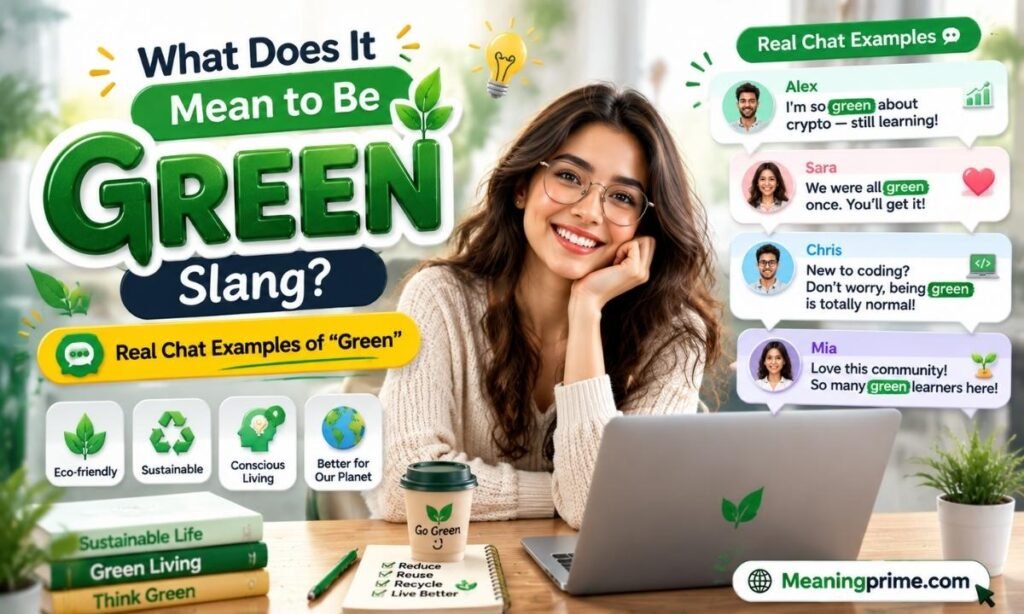
- Sam: “Why did the report come out wrong?” Priya: “I’m still green with this software, sorry.”
- Alex: “He keeps asking basic questions.” Jordan: “Give him a break, he’s green.”
- Maya: “You didn’t know that rule?” Chris: “Nope, totally green here.”
- Dev: “She looked nervous presenting.” Nina: “She’s green at public speaking, that’s normal.”
- Liam: “You lost the match again?” Owen: “I’m green at this game, still learning.”
- Farah: “He seemed lost during training.” Zoe: “Yeah, he’s green to how things run here.”
How to Reply When Someone Calls You “Green”
Matching the tone of the message makes replies feel natural instead of defensive.
Funny Replies
- “Green today, pro tomorrow 😎”
- “Loading experience… 10%”
- “New player has entered the chat”
Casual Replies
- “Yeah, still figuring it out.”
- “Fair point, I’m learning.”
- “Give me a week or two.”
Friendly Replies
- “Happy to learn from you.”
- “Appreciate the patience.”
- “I’ll get the hang of it soon.”
Neutral Replies
- “Noted.”
- “Understood.”
- “Makes sense.”
Is “Green” Rude or Offensive?
“Green” is generally not rude, since it describes a fact about experience rather than an insult about someone’s ability or intelligence.
Is It Safe to Use?
It is safe in casual settings among friends, classmates, or coworkers, especially when the tone stays light and supportive rather than mocking.
Should You Use It in School or Work?
It works fine in informal peer conversations, but formal writing, interviews, and official emails should use “inexperienced” or “new” instead, since slang can sound unprofessional in those settings.
Who Uses This Slang?
Knowing who uses what does it mean to be green slang the most helps explain why it spreads so quickly online.
Age Groups
Students, new employees, and young adults use it most, though older generations recognize it as well through workplace conversations.
Gen Z Usage
Gen Z leans on it heavily in gaming chats, TikTok captions, and casual group texts, often blending it with emojis for tone.
Platforms
TikTok, Instagram, WhatsApp, and standard text messages remain the most common places to see this slang in action.
Frequency
It appears moderately often overall, and it tends to show up more in spoken conversation than in typed messages.
Origin of “Green” Slang
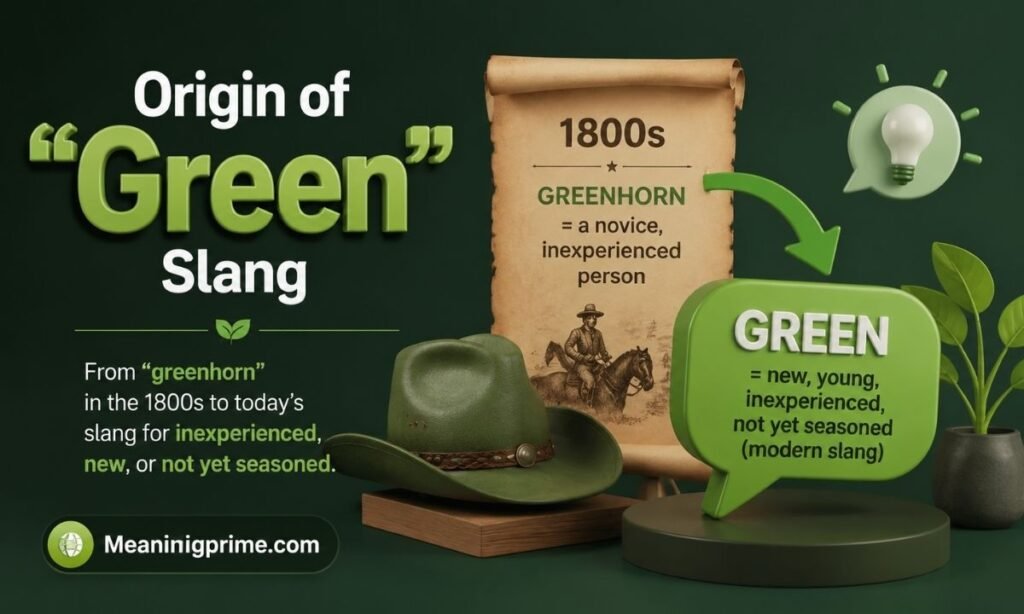
The roots trace back to “greenhorn,” a term from the 1400s originally describing young cattle with soft, greenish horns. That early image of youth and rawness slowly shifted toward describing people.
By the 1600s, “greenhorn” described new soldiers without battle experience, and later spread to any inexperienced newcomer. This history connects directly to what does it mean to be green slang today, since unripe fruit, young wood, and new recruits were all once described using the same color-based logic.
Internet Culture Influence
Gaming communities and workplace meme pages picked up the older idiom and gave it a modern, humorous spin, especially through short-form video content. TikTok trends helped introduce the phrase to audiences who may never have heard the word “greenhorn” itself. Despite the internet remix, the core meaning of inexperience has barely changed.
Is the Origin Clear?
Yes, the origin is well documented across language history sources, tracing cleanly from “greenhorn” through everyday phrases about unripe or unseasoned things, making it one of the clearer slang origins in common use today.
Common Idioms & Phrases With “Green”
- Greenhorn – a beginner or inexperienced person
- Green behind the ears – very new or naive
- Green thumb – naturally skilled at gardening
- Green-eyed monster – jealousy or envy
- Go green – to adopt eco-friendly habits
- Green light – permission to move forward with something
“Green” vs Similar Slang Words (Comparison Table)
| Term | Meaning | Type | Usage |
| Green | Inexperienced | Slang word | Casual chat |
| Newbie | Beginner | Slang word | Gaming, online |
| Rookie | New to a role | Slang word | Sports, workplace |
| Fresh | New or untested | Slang word | General casual talk |
| Greenhorn | Very inexperienced | Slang word | Traditional, older use |
Real-World Usage Example

Picture starting an internship where every task feels unfamiliar and every question feels basic. During a team meeting, a manager might say, “It’s fine, everyone here started green once.”
That single sentence reframes the situation completely, turning an awkward moment into a normal part of growth. It shows that being called “green” often carries encouragement rather than judgment, especially from people who remember their own early days at a job.
Frequently Asked Questions
What does green mean in Gen Z slang?
It usually means someone is new, inexperienced, or still learning a skill or task.
What does being green mean in slang?
It means a person lacks experience in a specific job, activity, or situation.
What is meant by “you’re my green”?
It generally means the speaker sees the other person as new or untrained in a particular area.
What does “she green” mean in slang?
It means she is inexperienced or unfamiliar with whatever topic is being discussed.
What does it mean to be green slang on TikTok?
On TikTok, it usually describes beginners in jobs, games, or everyday skills, often shown through relatable short clips.
Conclusion
Understanding what does it mean to be green slang makes casual conversations easier to follow, whether the word shows up at work, in a group chat, or on social media. Being called “green” is rarely an insult; it simply marks someone as new and still building their skills.
Every expert was once green at the very thing they now do well, which is why the term usually carries a supportive tone rather than a critical one. Recognizing this helps conversations stay relaxed instead of turning small mistakes into bigger issues.
When to Use It
- Casual chats with friends or classmates
- Friendly, informal workplace conversations
- Social media captions and comments
When to Avoid It
- Formal reports or business writing
- Job interviews
- Professional emails to clients or managers