


Have you ever felt your shoulders drop the moment the lights went low? Maybe you read best under one small lamp. Maybe you love the hush that settles after sunset. Then someone online called you a “lygophile.” Suddenly you wondered whether that’s a real word or just internet slang.
This guide breaks down the lygophile meaning in plain English. You’ll learn how to say the word, where it comes from, and which traits people link to it. We’ll also compare it with nyctophile and night owl to help you pick the label that fits best. Along the way, you’ll also see what psychology can honestly say about loving the dark.
Quick Answer: The lygophile meaning describes a person who loves darkness, dim light, or shadowy places and feels calm there. It’s a word for a personal preference. It isn’t a medical diagnosis or a mental health condition.
What Does a Lygophile Mean?

A lygophile is someone who feels drawn to darkness. That includes dim rooms, candlelit evenings, moonlit streets, and quiet shadows. For a lygophile, low light feels peaceful rather than scary.
The easiest way to remember the lygophile meaning is this: comfort in the dark. It has nothing to do with fear. It also says nothing about your mood, your social life, or your mental health.
What Is a Lygophile in Simple Words?
Picture someone who flips off the harsh ceiling light and clicks on a warm lamp. Their whole body relaxes. To them, bright light feels loud, while soft light feels like a slow, deep breath.
That’s a lygophile in simple words: a person who prefers low light and finds it relaxing. Some enjoy it at night. Others enjoy a dim room at two in the afternoon.
Lygophile Definition, Pronunciation and Origin

Let’s pin down the basics first. Once you know the definition, the sound, and the roots of the word, the rest falls into place.
Read More: ONS Meaning in Text: Full Form, Chat, Slang & Social Media
Lygophile Definition
Lygophile is a noun. It names a person who loves darkness, dim light, or shadowy surroundings. Writers also stretch the lygophile meaning into a poetic image of someone who feels most at home when the world dims down.
Related forms exist too. Lygophilia names the love of darkness itself. Lygophilic works as the adjective. Some online word lists record both.
| Word form | Part of speech | Meaning |
|---|---|---|
| Lygophile | Noun | A person who loves darkness or dim light |
| Lygophiles | Plural noun | More than one such person |
| Lygophilia | Noun | The love of darkness |
| Lygophilic | Adjective | Drawn to darkness or low light |
How Do You Pronounce Lygophile?
Most people say it as LY-goh-file. The first syllable rhymes with “pie.” The last syllable rhymes with “mile.” In dictionary-style notation, that looks like /ˈlaɪ.ɡoʊ.faɪl/.
Stress the first syllable. Accents shift the middle vowel slightly. Don’t worry about perfection. The word is rare enough that nobody will correct you.
Where Does the Word Lygophile Come From?
The word follows a familiar pattern. It joins two Greek-based pieces. The first, lygē, is commonly translated as twilight or dusk. The second, -phile, comes from philos, meaning lover or friend.
Put together, you get “lover of twilight.” That idea stretched naturally into “lover of darkness.” You’ll spot the same ending in bibliophile (book lover) and cinephile (film lover).
One caution: the word has little documented scholarly history. It’s a rare, informal term that spread mostly through websites and social media. Some pages claim psychologists coined it in the early 1900s. No reliable source backs that up. Treat the claim carefully.
Also, this “twilight” has nothing to do with the vampire film series. It simply means the soft light between day and night.
Lygophile Meaning in English
In everyday English, the lygophile meaning is refreshingly simple: someone who likes darkness or dim light. You’d use the word the way you’d use “bookworm” or “foodie.” It’s friendly. It’s descriptive. It’s not clinical.
The word doesn’t describe someone gloomy, scary, or antisocial. Plenty of lygophiles are cheerful, talkative, and warm. They just like their lighting soft.
Context matters too. In a poem, the lygophile meaning might hint at romance and mystery. In a casual chat, the lygophile meaning is simply “I like dim lighting.” Either way, the core idea stays the same.
Lygophile Meaning With Examples
Examples make the lygophile meaning easier to picture. Here are five everyday scenes:
- A student studies under a small desk lamp instead of bright overhead lights.
- A writer drafts best in a quiet, dim room late at night.
- A runner loves empty streets just after dusk.
- A friend lights three candles and switches off every other light at dinner.
- A photographer chases shadows, deep contrast, and moody evening light.
Notice the pattern. None of these people fear the dark. They enjoy the mood it creates.
Lygophile Personality and Common Traits
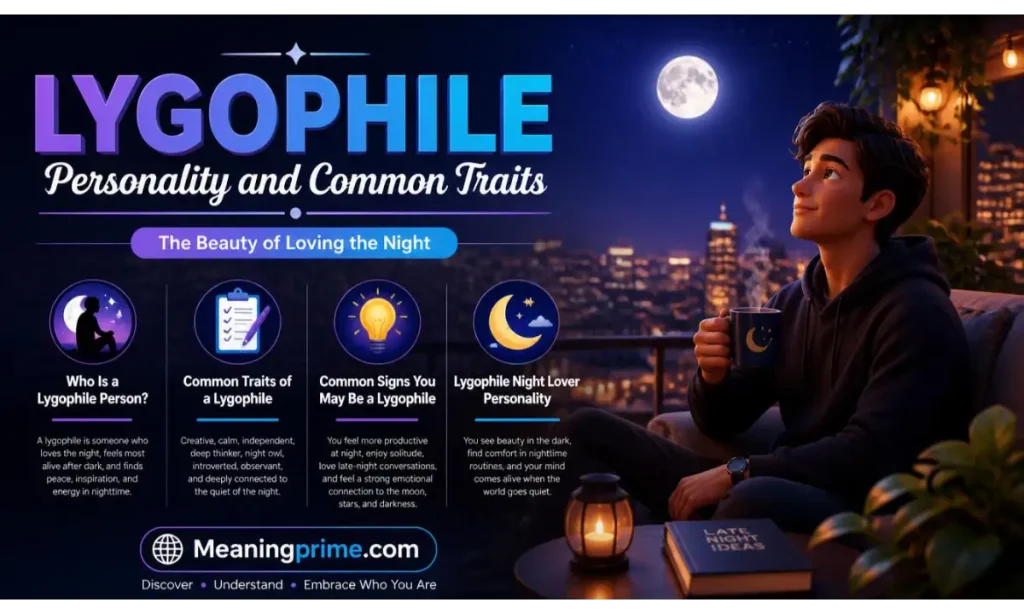
No official personality profile exists for a lygophile. The word describes a preference. Still, people who identify with it often describe similar feelings. A few patterns are worth a closer look.
Who Is a Lygophile Person?
A lygophile person is anyone who feels at ease in low light. That’s the whole requirement. Because the lygophile meaning centers on comfort rather than character, it fits many personality types. They might be an introvert or a party host. They might work night shifts or teach morning classes.
Because the label is informal, nobody can test you for it. You decide whether it fits. Think of it like calling yourself a coffee person or a rain person.
Common Signs You May Be a Lygophile
- Dim lamps relax you more than bright ceiling lights.
- You love candlelight, moonlight, or string lights.
- Harsh light feels draining or distracting.
- You enjoy quiet evenings more than busy afternoons.
- You think more clearly in a calm, shadowy space.
- You find dark, moody scenes beautiful.
- You don’t feel scared when the lights go out.
These aren’t diagnostic signs. They’re simply common ways people express the lygophile meaning in daily life.
Lygophile Night Lover Personality
People often call a lygophile a “night lover.” It’s a decent shortcut. It isn’t exact. Some lygophiles love the night itself. Others love darkness at any hour.
If you’re a night lover, you might enjoy late walks, stargazing, or writing after midnight. The key question isn’t “Do I stay up late?” It’s “Does darkness make me feel comfortable?”
Imagine Maya, a nurse who finishes late shifts around midnight. She dims every light at home, brews tea, and reads for an hour. That quiet, shadowy hour is her favorite part of the day. She isn’t hiding from anything. She’s simply recharging in her favorite way.
How to Know If You Are a Lygophile
Wondering whether the word fits you? Try this quick self-check. Answer each question honestly:
- Do I feel calmer in dim light?
- Do bright rooms ever feel too loud for my eyes?
- Do I pick soft lamps over overhead lights when I can?
- Do I enjoy dusk, nighttime, or moonlit spaces?
- Do I feel reflective when the room is quiet and dark?
If you said yes to most of them, the lygophile meaning probably fits you. There’s no score and no official test. Plenty of people simply enjoy the word as a fun way to describe themselves.
Is Being a Lygophile Normal?
Yes. Enjoying darkness is a normal preference, much like liking cold weather or loud music. People differ in how much light feels comfortable. Some crave sunny, open spaces. Others relax most in dim rooms.
In fact, the lygophile meaning describes a feeling many people share. A preference only deserves a second look when it causes problems. We’ll cover that shortly.
Lygophile in Psychology: What Science Can and Can’t Say
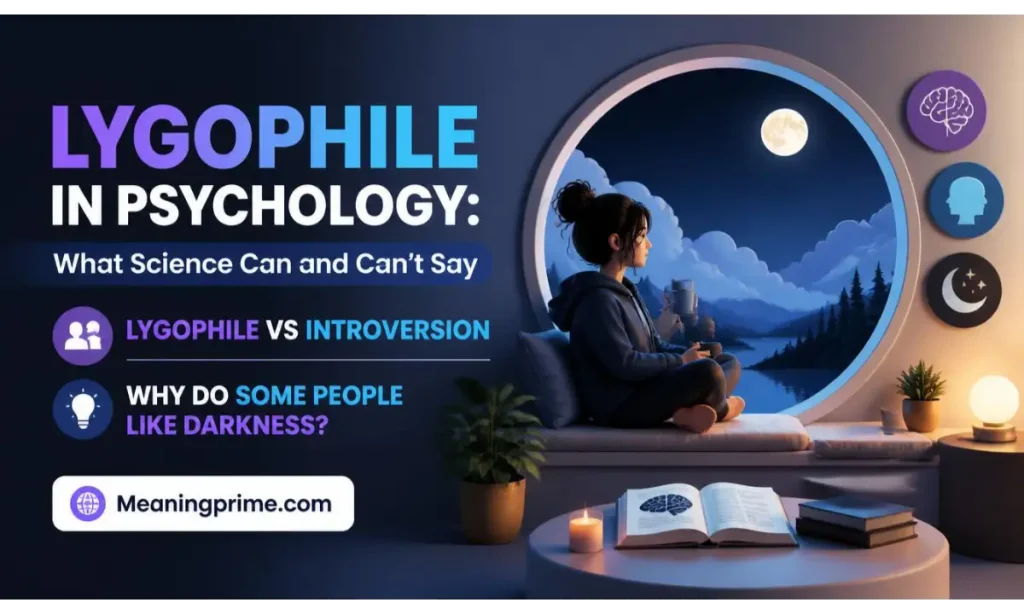
Here’s an honest starting point. Psychology has no formal diagnosis called lygophilia. No widely used validated test exists for it either. So any article claiming to reveal your “true personality” from your love of dim light is guessing.
When people search for the lygophile meaning in psychology, they usually want to know one thing: is this healthy? In most cases, yes. Science does offer useful background about light, sleep, and personality. Let’s use it carefully.
Lygophile vs Introversion
These two ideas often get mixed up. Introversion describes how you recharge. Introverts usually regain energy from quiet time rather than big crowds. A lygophile’s trait is about light, not social energy.
You can be both. You can also be an extrovert who loves candlelit parties. Liking darkness doesn’t make you shy. Being shy doesn’t make you a lygophile. Keep the ideas apart so the lygophile meaning stays clear.
Why Do Some People Like Darkness?
No single reason explains it. Several ordinary factors may play a part:
- Less stimulation. Dim rooms reduce visual clutter, which many people find soothing.
- Light sensitivity. Some people simply find bright light uncomfortable.
- Body clock. Your circadian rhythm shapes when you feel alert. People who lean toward evenings often feel sharper after dark.
- Privacy and calm. Darkness can feel cozy, like a blanket for the senses.
- Memories and habit. Happy nights around campfires or under stars can shape your taste for low light.
These are possible explanations. They aren’t proven rules for every lygophile. Whatever the cause, the lygophile meaning rests on ordinary human variety.
Light also affects sleep. Bright light in the evening can suppress melatonin, a hormone linked to sleepiness. Dimming your lights at night is common sleep advice. In that sense, a lygophile’s evening habits may even help.
Is Lygophile a Psychological Condition?
No. Lygophile isn’t a diagnosis. Established diagnostic manuals don’t list lygophilia as a disorder. The lygophile meaning describes liking darkness. It doesn’t describe suffering because of it. That’s why the lygophile meaning in psychology stays purely descriptive.
Online discussions sometimes turn everyday preferences into psychological labels. A love of dim rooms or quiet nights doesn’t signal depression, anxiety, or social withdrawal on its own.
Preference vs. problem
A preference feels good and fits your life. A problem causes distress or gets in the way. Consider talking with a doctor or mental health professional if:
- You avoid daylight, work, school, or people for long stretches.
- Your mood stays low and the dark feels like hiding instead of comfort.
- You struggle with sleep or daytime functioning.
- Your mood drops sharply during darker months.
Asking for support is never a flaw. It simply means someone trained can help you sort out what’s going on.
Lygophile vs. Nyctophile vs. Night Owl

These three terms overlap, which causes plenty of confusion. A quick table makes the differences clear.
| Term | Main focus | What it describes |
|---|---|---|
| Lygophile | Darkness and dim light | Comfort with low-light surroundings |
| Nyctophile | The night | A love of nighttime and its atmosphere |
| Night owl | Daily schedule | Preferring to stay up and work late |
| Scotophile | Darkness | A related, less common term for a darkness lover |
Here’s the shortcut. Lygophile means darkness. Nyctophile means night. Night owl means late hours. In short, the lygophile meaning centers on light levels, while the other two terms center on time.
What Is the Meaning of Nyctophile?
A nyctophile is someone who loves the night. The word combines Greek nyx, meaning night, with -phile. Nyctophiles often enjoy night walks, starry skies, quiet streets, and sometimes nightlife. Don’t confuse it with nyctophobia, which is the fear of the dark.
Lygophile vs. Nyctophile: What Is the Difference?
The difference comes down to focus. A lygophile loves darkness itself: the dim, shadowy feel of a space. A nyctophile loves the night as a time of day.
Try this test. Imagine a blacked-out room at noon. A lygophile may adore it. A nyctophile may shrug, since it isn’t actually night. Now picture a bright city street at midnight. That might thrill a nyctophile. A lygophile may find it too glaring. Still, many people use the two words interchangeably in casual talk. That’s fine.
Lygophile vs. Night Owl
A night owl follows a body-clock pattern. They feel most alert late in the evening and prefer going to bed late. That’s about timing. A lygophile’s trait is about lighting.
A night owl can work at 1 a.m. under bright lights. A lygophile can unwind in a dim room at 2 p.m. Of course, you can be both. You can also be just one. Keep that contrast in mind because the lygophile meaning never depends on the clock.
Lygophile vs. Scotophile
Scotophile is a rarer cousin. It builds on the Greek skotos, meaning darkness. Sources define it a little differently. Some treat it as a plain synonym for a darkness lover. Others give it a more technical feel. With no firm standard, think of scotophile as a close relative of lygophile rather than a strict twin. For everyday writing, either word works.
Lygophile vs. Lygophobia: Love vs. Fear of Darkness
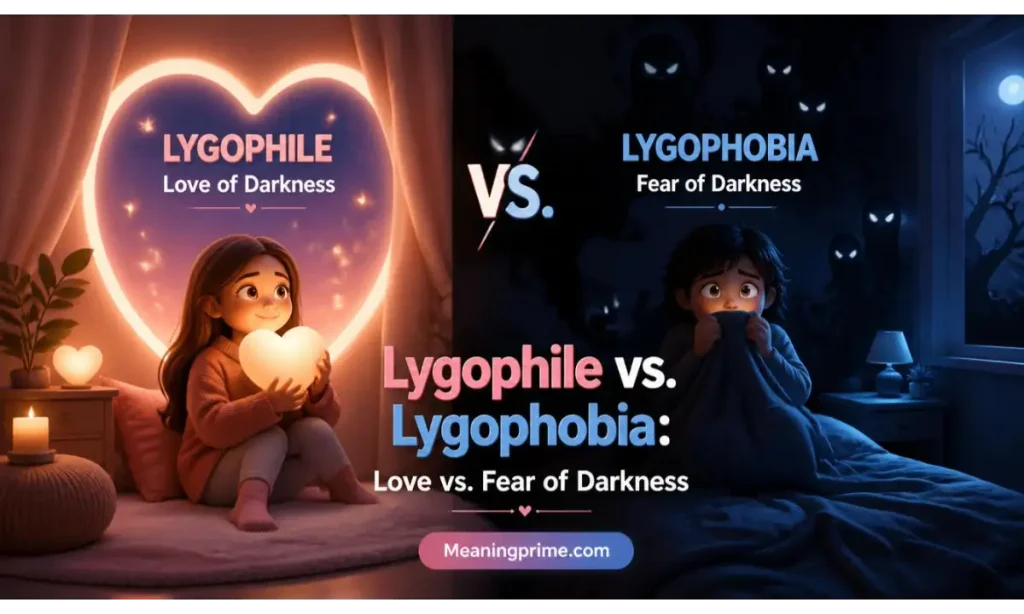
These two words look alike. They mean opposite things. Some sources list lygophobia as another name for the fear of darkness. It sits close to nyctophobia and scotophobia. That kind of fear can cause real distress.
A simple rule helps. The suffix -phile means love. The suffix -phobia means fear. A lygophile relaxes in the dark. A person with lygophobia feels anxious in it. Remember, the lygophile meaning is about comfort. Lygophobia is about fear. If fear of the dark disrupts your sleep or daily life, a health professional can help.
Lygophile and Other “-Phile” Words
Lygophile belongs to a big family of -phile words. Each one names a love of something specific. Several of them show up in the same searches. Here’s a quick tour. Comparing them sharpens the lygophile meaning.
What Is the Meaning of Logophile?
A logophile is a lover of words. The term comes from Greek logos, meaning word. Logophiles adore dictionaries, puzzles, and unusual vocabulary. People often mix it up with lygophile because the spellings look alike. Some websites even define lygophile as a word lover, which is incorrect. The true lygophile meaning relates to darkness.
What Is the Meaning of Heliophile?
A heliophile loves the sun. Helios is the Greek word for sun. Picture someone who chases sunny beaches, bright mornings, and long days outdoors. In many ways, a heliophile is the natural contrast to a lygophile.
Selenophile Meaning
A selenophile loves the moon. Selene was the Greek goddess of the moon. Many lygophiles also feel like selenophiles, since moonlit nights feel soft and quiet.
Pluviophile Meaning
A pluviophile loves rain. The word draws on Latin pluvia, meaning rain. Gray skies, rain sounds, and cozy indoor light often go together. That’s why many lygophiles call themselves pluviophiles too.
| Word | Loves | Root |
|---|---|---|
| Lygophile | Darkness, dim light | Greek lygē (twilight) |
| Nyctophile | The night | Greek nyx |
| Logophile | Words | Greek logos |
| Heliophile | The sun | Greek helios |
| Selenophile | The moon | Greek selene |
| Pluviophile | Rain | Latin pluvia |
What Does Lygophile Mean on Social Media?
On Instagram, TikTok, and Pinterest, the word works like an identity tag. People drop it into bios, captions, and photo descriptions. It usually signals a love of dim light, rainy evenings, candles, and quiet nights.
Online, the lygophile meaning often stretches beyond the strict definition. It becomes a mood or an aesthetic.
Lygophile Aesthetic: What Does It Mean?
The lygophile aesthetic centers on shadow and soft light. Picture candle flames, moonlit windows, rain on glass, and deep, muted colors. Photographers, writers, and decorators borrow this look often.
Typical elements include:
- Deep shadows and dim interiors
- Candlelight and warm lamps
- Moonlit scenes and night photography
- Dark backgrounds with soft contrast
Still, liking the look doesn’t automatically make you a lygophile. The aesthetic is a style. The lygophile meaning describes your genuine comfort with darkness.
Is There a Lygophile Symbol?
No official symbol exists for lygophiles. The word isn’t tied to a flag, a logo, or any standard emblem. However, people often use informal visuals to represent it:
- A crescent moon 🌙
- A lit candle 🕯️
- A star-filled night sky
- A silhouette in a dim window
Treat these as fun, personal choices. Nobody will think you’ve picked the wrong symbol.
Bio and Caption Ideas
Need a line for your profile? Try one of these:
- “Lygophile. Happiest when the lights are low.”
- “Soft lamps, quiet nights, zero apologies.”
- “Born for dusk and dim rooms.”
- “Lygophile at heart, night light in hand.”
- “Where shadows gather, I feel at home.”
Copy them, tweak them, or mix them to match your own voice.
Lygophile Meaning in Hindi and Urdu
Many readers look up the lygophile meaning in Hindi and Urdu. Here are clear translations for both.
- Hindi: अंधकार-प्रेमी (andhakar-premi), meaning a lover of darkness or dim light
- Urdu: اندھیرے کو پسند کرنے والا شخص (andhere ko pasand karne wala shakhs), meaning a person who likes darkness and feels at ease in it
Both translations carry the same core idea: comfort in low light. Neither one implies fear, sadness, or illness. In casual conversation, people often explain the idea in a short phrase instead of using the English word. That keeps the lygophile meaning intact across languages.
How to Use Lygophile in a Sentence
Seeing the lygophile meaning in action helps it stick. These sentences show how the word works:
- She calls herself a lygophile because dim rooms help her relax.
- As a lygophile, he picks candlelight over bright dinner lighting every time.
- The photographer’s moody style shows her lygophile side.
- Being a lygophile doesn’t mean you’re a night owl.
- My brother, a true lygophile, reads with one small lamp and nothing else.
The word suits casual talk, blog posts, and creative writing. In formal or scientific writing, describe the preference directly instead. For instance, write “prefers low-light environments.” The lygophile meaning works best in friendly, informal contexts.
Lygophile Synonyms and Related Words
| Type | Words |
|---|---|
| Close synonyms | darkness lover, shadow lover, dusk lover, nyctophile, scotophile |
| Related darkness words | crepuscular (active at twilight), nocturnal (active at night), gloaming (dusk), umbra (shadow), tenebrous (dark and shadowy) |
| Related personality terms | night owl, introvert |
Pick the synonym that fits your point. Remember that nyctophile and night owl overlap with lygophile but don’t match it exactly.
Common Misunderstandings About Lygophiles
A few myths about the lygophile meaning keep circulating. Let’s clear them up.
Does a Lygophile Hate Daylight?
No. Many lygophiles love sunny walks and bright vacations. They simply prefer dim light for certain moments or places.
Does Lygophile Mean Someone Who Loves Night?
Not exactly. That’s the nyctophile. The lygophile meaning focuses on darkness and low light, whichever hour it appears.
Is Every Lygophile a Night Owl?
No. A lygophile might wake at 6 a.m. and still enjoy a dim, quiet kitchen. Sleep schedule and lighting taste are separate things.
Is Lygophile a Medical Diagnosis?
No. It’s a descriptive word, not a medical term. A doctor wouldn’t diagnose you as a lygophile.
What Is the Opposite of a Lygophile?
No official antonym exists. Still, a few words come close:
- Heliophile: a lover of sunlight
- Photophile: a lover of light (used informally by some sites)
- Morning person: a casual phrase for someone who thrives in early daylight
Since the lygophile meaning has no formal opposite, it’s often clearer to say “someone who prefers bright, well-lit spaces.”
Frequently Asked Questions
What does lygophile mean?
The lygophile meaning is a person who loves or feels comfortable in darkness, dim light, or shadowy places. It describes a preference. It isn’t a diagnosis.
What is the difference between a lygophile and a nyctophile?
The lygophile meaning centers on darkness and low light. A nyctophile loves the night as a time of day. The two overlap but aren’t identical.
Is lygophile a psychological disorder?
No. The lygophile meaning describes a preference. It deserves a closer look only if your relationship with darkness causes distress or disrupts daily life.
Can someone be both a lygophile and a night owl?
Yes. Many people enjoy darkness and stay up late. The two words describe different things: a lighting preference and a sleep schedule.
Is lygophile a real word?
Yes, though it’s rare and informal. Some online word lists record lygophilia and lygophilic. Many standard dictionaries may not list it. That makes it best suited to casual or creative writing, where the lygophile meaning is easy to explain.
Conclusion
Here’s the short version. The lygophile meaning is simple: a person who feels at ease in darkness and low light. It differs from nyctophile (a love of night) and night owl (a late schedule). It’s also the opposite of lygophobia, the fear of darkness.
Liking the dark is a preference, not a diagnosis. If the word fits you, wear it proudly. If darkness ever feels like hiding or causes distress, talking with a professional is a smart, caring step.