
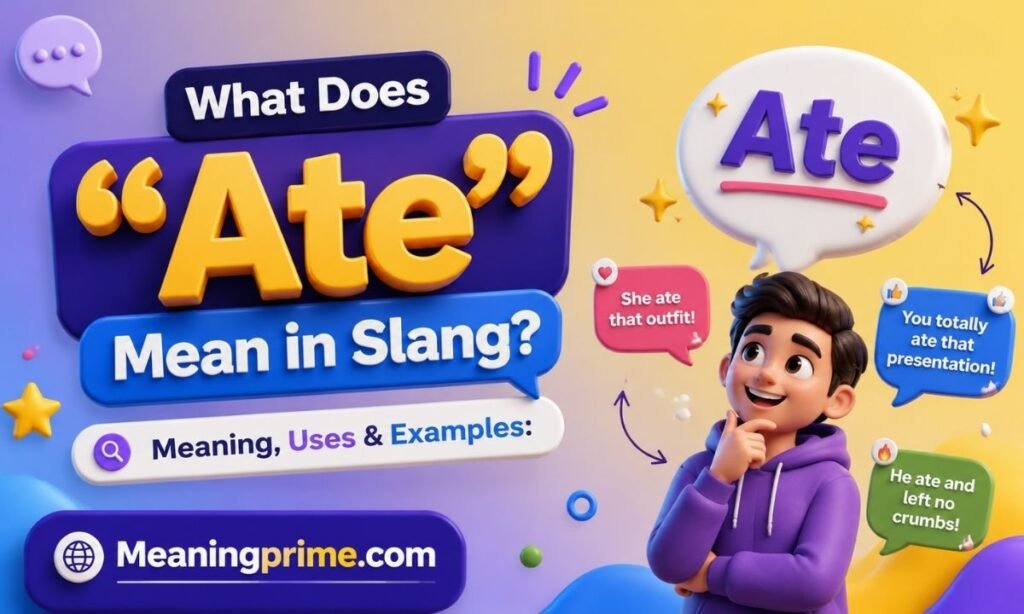

If you’ve scrolled through TikTok or Instagram lately, you’ve probably seen someone comment “ATE” under a video. It’s not a typo. It has nothing to do with food. It’s actually one of the most popular compliments in online slang today.
This guide explains exactly what “ate” means and where it came from. You’ll see how it’s used in texting, TikTok, Snapchat, and Instagram. We’ll also clear up a common mix-up with its unrelated Filipino meaning. By the end, you’ll know exactly how to use it and how to reply to it.
Quick Answer
“Ate” is slang for doing something extremely well. When someone says “you ate,” they mean you nailed a performance, an outfit, or a comeback with total confidence. It’s a compliment, not a literal reference to eating.
What Does “Ate” Mean in Slang?
In slang, “ate” describes someone who did something impressively, confidently, or flawlessly. It’s used as praise, similar to saying “you crushed it.”
You’ll usually see it as a short, standalone reaction. Someone posts a video or a bold move, and the comments simply say “ate” or “she ATE.” No further explanation is needed, because the word carries the whole compliment on its own.
Where Did the Slang “Ate” Come From?
This slang traces back to Black and Latino LGBTQ+ ballroom culture, where performers were praised for dominating a category or a runway walk. “Eating” a performance meant owning it completely, leaving nothing left to critique.
From there, the phrase moved into wider Black internet culture before spreading across TikTok and Instagram in the mid-2010s. The extended version, “ate and left no crumbs,” grew from the same idea: someone performed so well that nothing was left to pick apart.
“You Ate” Meaning in Slang
“You ate” is the most direct form of this compliment, and it works in almost any situation. It tells someone they did something so well it deserves recognition right away.
For example, if a friend nails a job interview or wins an argument cleanly, “you ate” fits perfectly. It’s short, enthusiastic, and doesn’t need further explanation to land.
“Ate” Meaning in Chat From a Girl
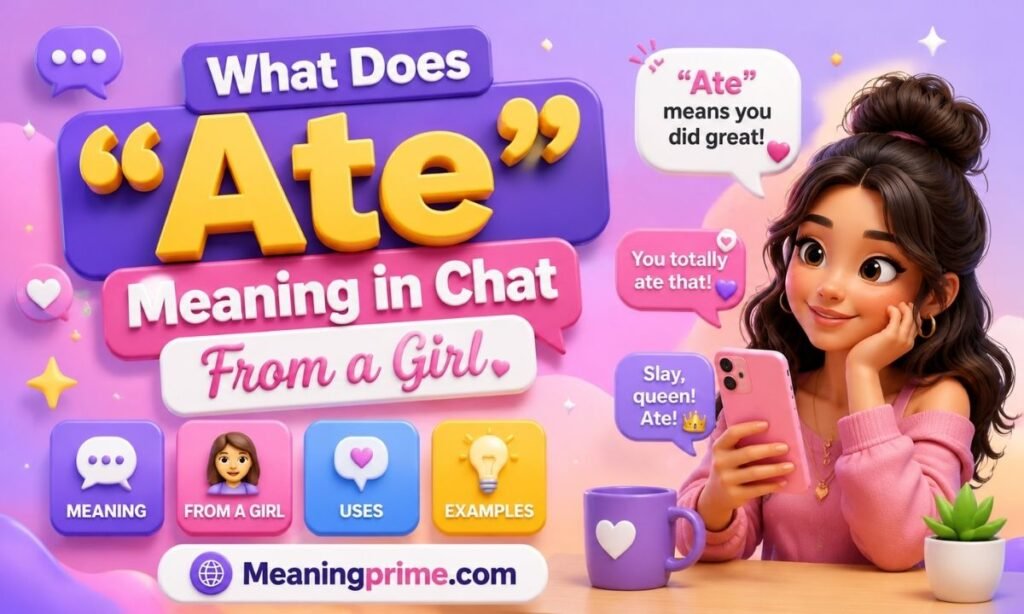
When a girl texts “you ate” or just “ate,” she’s giving a genuine compliment, usually about confidence, style, or how someone handled a situation. It’s friendly praise, not a hidden message or a romantic hint by default.
Context matters here. If she’s reacting to a selfie, she’s complimenting your look. If she’s reacting to something you said or did, she’s praising how you handled it. Either way, it’s a positive, upbeat reaction meant to hype you up.
What Does “Ate” Mean in Texting?
In texting, “ate” works the same way it does on social media: quick praise for something done well. People use it because it’s short and instantly understood by anyone familiar with the slang.
A: I finally told my landlord the AC needs fixing. B: And? A: He’s sending someone tomorrow. B: You ate that conversation.
This example shows how “ate” applies to everyday wins, not just performances or fashion moments.
“Ate” Meaning on TikTok, Snapchat & Instagram
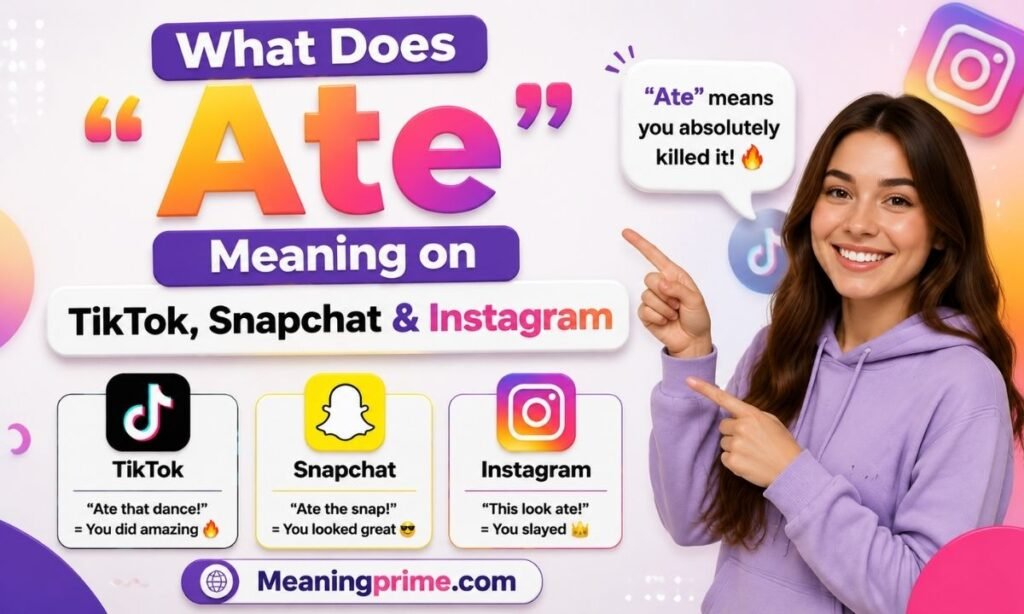
Each platform uses “ate” slightly differently, depending on what people usually post there. The core meaning stays the same, but the context shifts based on the content type.
| Platform | Common Use | Typical Trigger |
| TikTok | Comments on videos | Dance clips, transformations, comebacks |
| Snapchat | Story replies | Selfies, outfit photos, event snaps |
| Post comments | Photoshoots, fashion, captions |
TikTok is where this slang became mainstream, thanks to quick comment culture on short videos. Snapchat and Instagram lean more visual, so “ate” there often praises appearance rather than a full performance.
TikTok
TikTok comment sections are full of one-word reactions, and “ate” is one of the most common. It shows up under dance videos, glow-up transformations, and confident comebacks in duets.
Because TikTok moves fast, people rarely write long comments. A single word like “ATE” in all caps communicates strong approval instantly, without slowing down the scroll.
Snapchat
On Snapchat, “ate” usually responds to a story rather than a public post. Someone shares a selfie or outfit snap, and a friend replies “you ate” directly in the chat.
This use tends to feel more personal, since Snapchat conversations are typically between friends rather than public commenters. It works as a quick confidence boost between people who already know each other.
Instagram comments often use “ate” for photoshoots, outfit posts, and curated content. It’s a way of saying the picture or the styling looked genuinely impressive.
Since Instagram leans toward polished, intentional posts, “ate” here often praises effort and presentation specifically, more than spontaneous moments.
“Ate” in Urban Dictionary
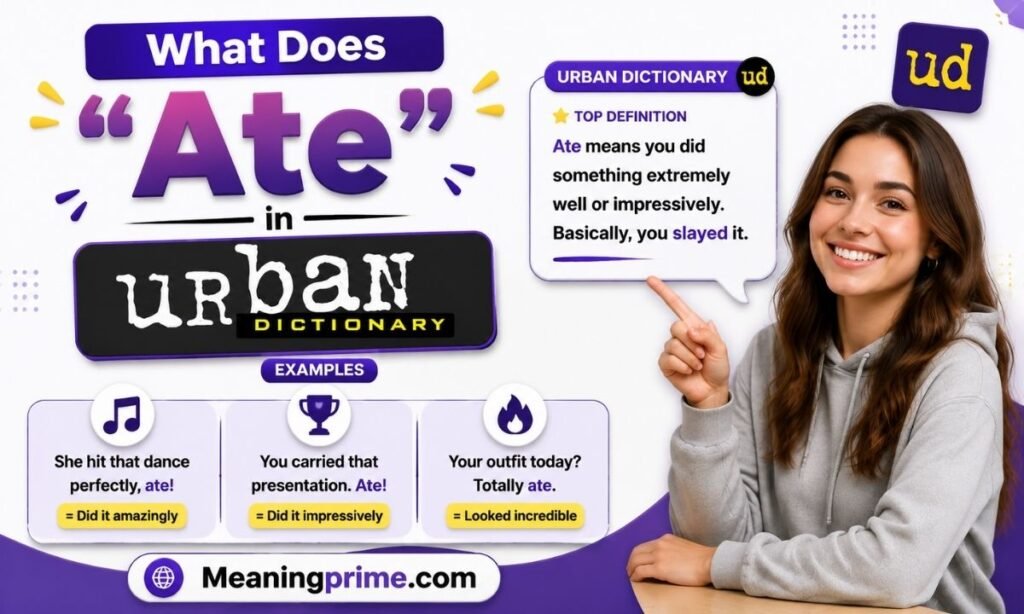
Urban Dictionary defines “ate” simply as the past tense of “eat,” used to mean someone dominated or excelled at something. Entries describe it as a way of saying someone “did that” in sports, performances, or everyday situations.
This lines up with how the term is actually used online. Urban Dictionary entries also note regional use, particularly in parts of the U.S., before the phrase spread more broadly through social media.
Tone Variations: Sincere, Sarcastic & Playful “Ate”
Not every use of “ate” is a genuine compliment. The tone depends heavily on context and the situation being described.
- Sincere: “She ate that presentation.” (real praise)
- Sarcastic: “You tripped on stage? Yeah, you really ate that.” (teasing, opposite meaning)
- Playful: “I ate the whole pizza.” (literal joke mixing both meanings)
Reading the surrounding conversation is the easiest way to tell which tone is being used. A genuine compliment usually follows something impressive, while sarcasm often follows an embarrassing moment.
“Ate” vs. Similar Praise Slang
“Ate” isn’t the only slang term used to hype someone up online. A few related words overlap in meaning but carry slightly different nuances.
| Term | Core Meaning | Typical Use |
| Ate | Did something extremely well | Performances, outfits, comebacks |
| Slay | Looked or performed amazing | Fashion, confidence |
| Served | Delivered a strong look | Fashion-focused praise |
| Understood the assignment | Did exactly what was expected | Creative or styled content |
These terms often show up together in the same comment sections. “Ate” tends to focus on flawless execution, while “slay” leans more toward confidence and style.
Is “Ate” the Same in Filipino Slang?
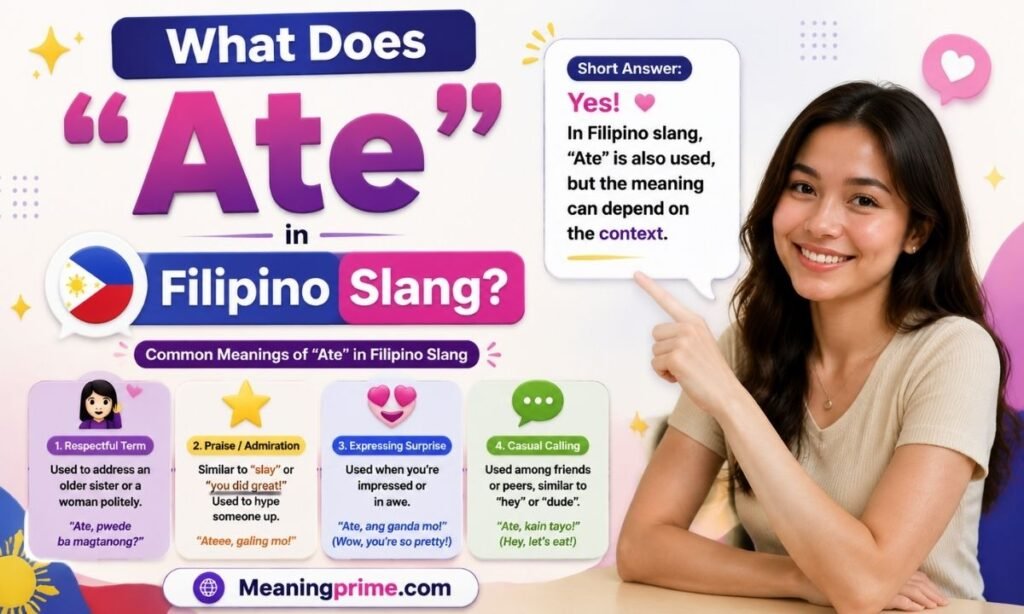
No, and this is where a lot of confusion comes from. In Filipino culture, “ate” (pronounced “AH-teh”) is a respectful term for an older sister or older female relative, completely unrelated to the English slang meaning.
This version of “ate” has nothing to do with performance or praise. It’s used out of respect and familiarity, often by younger siblings or friends addressing someone older than them.
How to Reply When Someone Says “You Ate”
Replying to this compliment is simple, and the right response depends on the tone you want to match.
- Casual: “Thanks, I try.”
- Playful: “Left no crumbs.”
- Genuine: “That means a lot, thank you.”
Matching their energy usually works best. If someone hypes you up enthusiastically, a short, confident reply fits better than an overly formal one.
Frequently Asked Questions
What is “ate” in Gen Z slang?
It means someone did something impressively well, whether that’s a performance, an outfit, or handling a situation confidently.
What is the meaning of “I ate you”?
This isn’t standard slang usage. “Ate” typically describes someone’s own performance (“you ate”), not an action directed at another person.
What does “she ate” that mean in slang?
It means she did something extremely well, usually a performance, look, or moment where she stood out.
What does “ate down” mean in slang?
“Ate down” is a variation meaning someone dressed impressively well, often used to compliment a fitted, stylish outfit.
Conclusion
“Ate” has become one of the most flexible compliments in online slang, covering everything from dance videos to outfit posts to confident comebacks in a group chat. Its roots in ballroom culture give it real history, and its spread across TikTok, Snapchat, and Instagram shows how quickly internet language evolves.
Just remember that the same word carries a completely different, respectful meaning in Filipino culture, referring to an older sister or older woman. Knowing both meanings means you’ll never misread the word again, no matter where you come across it.