

You get a message ending in “hun,” and your brain starts spinning. Is it sweet? Flirty? Quietly passive-aggressive? You check the emoji, reread the sentence twice, and still can’t decide whether to smile or roll your eyes.
You’re not alone. The hun meaning in text trips up plenty of people because the word shifts with the sender, the mood, and the relationship. This guide gives you a clear answer, real example chats, tone signals, and replies you can send right now.
Quick Answer: The hun meaning in text is “honey” in short form. People use it as a warm, casual nickname that can sound friendly, caring, or flirty. Sarcasm and condescension are possible too, so always check who sent it and how it was written.
Hun Meaning in Text – Quick Meaning
In texting and online chat, hun meaning in text comes down to one idea: a shortened “honey.” It’s a soft nickname people use to sound kind and relaxed. Think “sweetie” or “dear,” only quicker to type.
Here’s a simple definition you can save:
Hun (noun): A friendly nickname used to address someone warmly or casually.
The word rarely carries a literal meaning. Instead, it sets a mood. When someone writes “Thanks, hun,” they aren’t describing you. They’re adding a little warmth to the sentence, like a smile in written form.
Common Meanings
- A term of affection between partners or close friends
- A friendly way to address someone
- A casual, everyday conversational nickname
- A gentle tone marker that softens a message
Quick Examples
“Don’t worry, hun. Everything will work out.”
“Thanks for helping me, hun!”
“Take care of yourself, hun.”
Each line sounds caring rather than literal. That’s the hun meaning in text at its most common.
Full Meaning of Hun: What Is Hun Slang For?
The full meaning of hun is “honey.” As slang, it works as a pet name that signals kindness, closeness, or playful teasing. Slang dictionaries list it the same way. They also add a warning: from someone who isn’t your partner, it can read as sweet or as condescending.
Hun Meaning in English
As an affectionate nickname, “hun” is informal English. It’s a spelling shortcut that mirrors how many people say “honey” out loud. You’ll see it in texts, comments, and casual speech. You won’t see it in formal writing, and you shouldn’t use it there.
Origin & Background
The story starts with “honey.” Etymonline traces the word’s use as a term of endearment back to at least the mid-1300s. Nobody typed it back then, of course. People simply said it out loud to people they loved.
Over time, speakers softened the word into “hon” and “hun.” Etymonline dates “hon” as an affectionate shortening of “honey” to the early 1900s. The short forms stuck because they sound friendly and take less effort. So the hun meaning in text today is really a centuries-old habit wearing a new outfit.
Evolution in Digital Communication
Texting rewards speed, and short words win. Instead of “Thank you, honey,” people started typing “Thanks hun.” Messaging apps made that casual style feel normal. WhatsApp, Instagram, and TikTok comment sections pushed it even further.
Today, the hun meaning in text covers friends, family, partners, and even people you’ve never met. The word traveled from living rooms to group chats without losing its warmth.
Do You Say Hon or Hun?
Both spellings work. They mean the same thing. “Hon” is the older written form, and “hun” mirrors how many people pronounce it. Personal habit, region, and autocorrect decide which one shows up. If you’re unsure, pick whichever feels natural. Nobody will blink.
10 Brilliant Meanings of “Hun” and What Each One Sounds Like
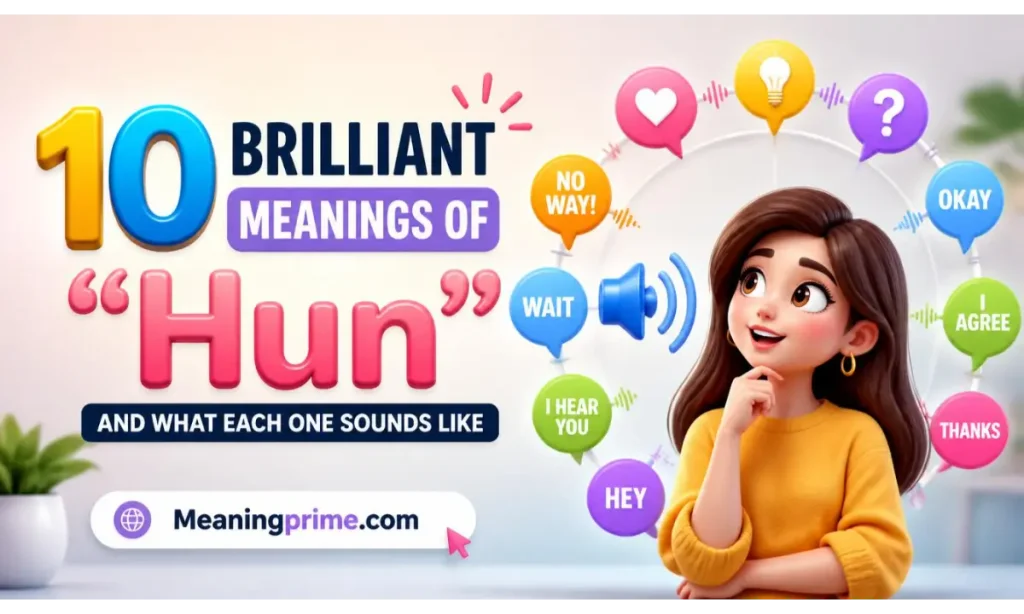
The hun meaning in text isn’t one-size-fits-all. Here are ten ways people use it, each with a quick example.
1. A Term of Affection
Partners and close friends use “hun” to show love. It’s the classic, cozy version. “Miss you, hun ❤️”
2. A Friendly Greeting
Some people open chats with it. “Hey hun, how’s your day going?” It’s warm and casual. Nothing more is hiding behind it.
3. Comfort and Reassurance
When someone’s stressed, “hun” softens the message. “You’ve got this, hun.” It tells you the sender is on your side.
4. Thanks and Appreciation
“Thanks, hun!” is usually a simple thank-you with a smile attached. Most of the time, that’s the entire message.
5. A Flirty Hint
Add a wink emoji and a compliment, and “hun” can lean flirty. “You looked great tonight, hun 😉” The hun meaning in text turns flirty only when other clues line up. Look at the full pattern, not just the word.
6. Playful Teasing
Friends often use it as a joke. “Nice try, hun 😂” The laughing emoji keeps everything light.
7. Sarcasm
“Sure, hun. Whatever you say.” Short sentences, a period, and no emoji often signal a polite eye-roll. Slang like “hunty,” a US blend of “honey” and a cruder word, leans sarcastic too.
8. Condescension
Sometimes it sounds patronizing, like talking down to a child. “Relax, hun. It’s not that serious.” A power gap or a lack of familiarity makes this reading more likely.
9. Getting Someone’s Attention
“Hun, can you send me that address?” Here the word works like “hey” or “excuse me.” It’s a verbal tap on the shoulder.
10. Polite Talk With Strangers
Servers, shop workers, and older customers often say it on autopilot. “What can I get you, hun?” That’s habit, not romance. Keep this in mind whenever you decode the hun meaning in text from someone you don’t know.
What “Hun” Means Depending on Who Sends It
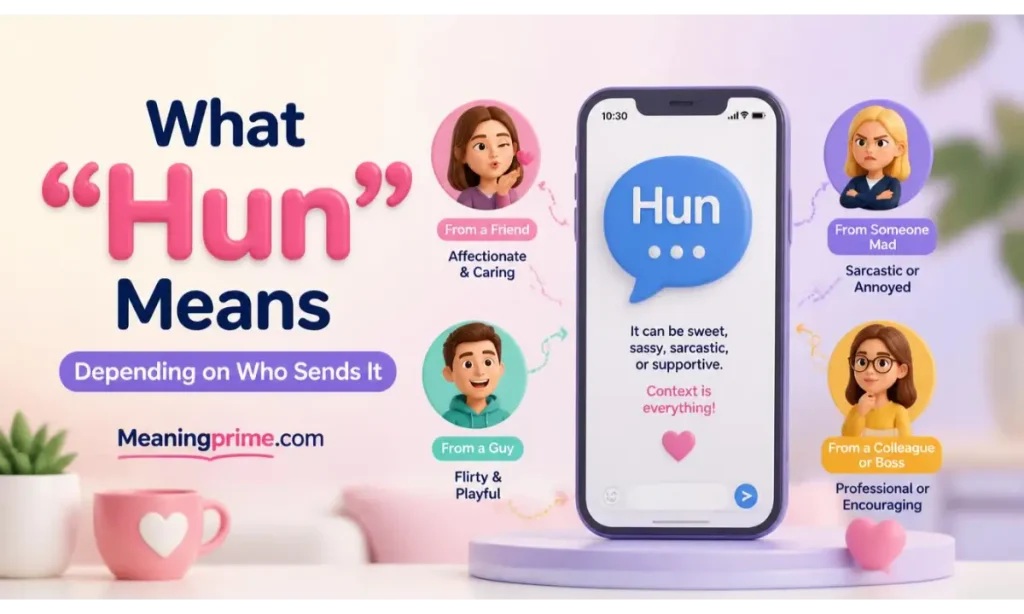
The sender matters as much as the word. The hun meaning in text shifts with the person typing. The same message can feel sweet from a friend and strange from a stranger.
When a Girl Calls You Hun in a Text (Hun Meaning From a Woman)
Women often use “hun” as a warm, nurturing word. Between friends, it’s usually plain kindness. In a relationship, it can feel affectionate. However, a short “Okay, hun.” after an argument often signals annoyance. Check what she wrote right before it, because the context carries the real message.
Hun Meaning From a Guy, Including in Chat
When a guy uses it, look at how he treats you otherwise. If he pairs it with caring check-ins like “Did you get home safe?”, he may feel real affection. If he calls everyone “hun,” it’s probably just his style.
In chat, a wink emoji plus compliments plus late-night messages points toward flirting. Without those clues, treat it as friendly. Reading the hun meaning in text from a guy works like any other case: watch the pattern, not the single word.
Hun From a Stranger or Older Person
Older people and service workers often say it out of habit. They mean it kindly. Some younger readers find it too familiar, and that’s a fair reaction. You don’t owe anyone a response. Still, assume good intent unless the tone says otherwise.
Can You Call a Girl Hun?
You can, if you know her and she’s comfortable with it. With close friends, it’s usually fine. With a new match, a coworker, or someone you barely know, it can feel too personal. Her name is always the safer choice. If she uses a sweet nickname for you first, you’ve got your green light.
Real-Life Conversations

Examples make the hun meaning in text click. Here are three chats that show how the word plays out.
WhatsApp Conversation
Sara: I’m so nervous about tomorrow’s exam.
Mina: You’ve studied hard. You’ll do great, hun.
Sara: I hope so 😅
Instagram DM Conversation
Maya: Your new photos look amazing!
Zoe: Thank you, hun! That means a lot.
Text Message Conversation
Lena: Did you get home safely?
Omar: Yes, I did. Don’t worry, hun.
Lena: Good. Get some rest.
In all three chats, the word adds warmth without changing the message. That’s the typical hun meaning in text.
Emotional & Psychological Meaning
Soft words calm people down. That’s why “hun” works so well. When someone says it kindly, you may feel safe, cared for, and a little closer to them. Close friends, partners, parents, and older relatives use it most. It often points to a supportive personality, someone who wants to sound gentle and approachable.
This also explains why people use “hun” online so often. It makes a cold screen feel friendlier. However, tone can flip the feeling in a second. Teasing, sarcasm, and passive-aggressive digs all borrow the same word. “Relax, hun” might comfort you or dismiss you. The hun meaning in text lives in the delivery, not the spelling.
Usage in Different Contexts
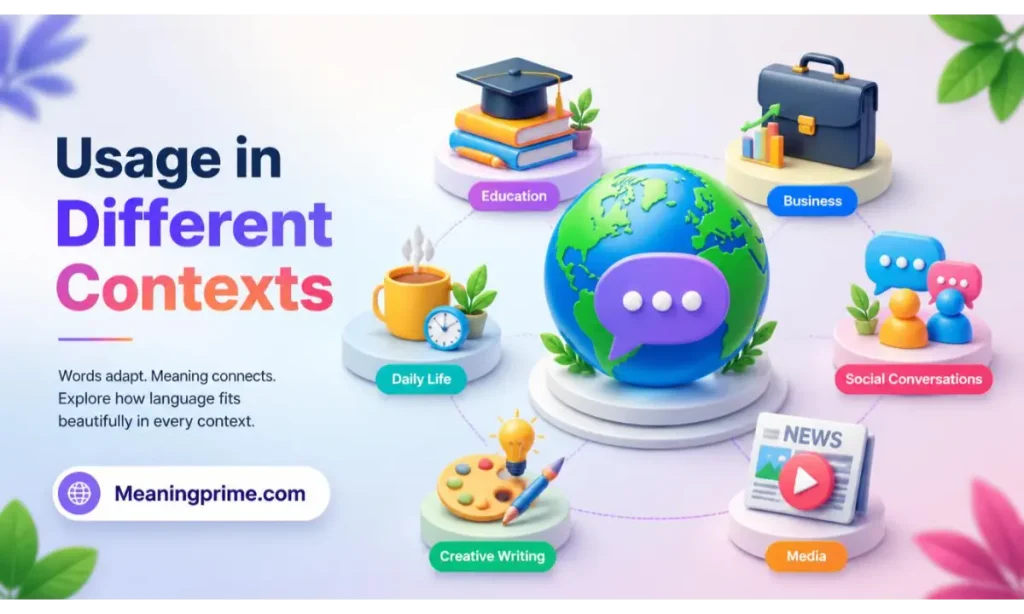
Where you see “hun” changes how you read it. Here’s how the hun meaning in text plays out across common settings.
1. Social Media
On Instagram, TikTok, and Facebook, “hun” shows up in comments and replies. “You look gorgeous, hun!” or “Stay strong, hun.” Most of the time, it’s supportive. Occasionally a stranger’s comment sounds snarky, so read the whole thread before deciding.
2. Friends & Relationships (Hun Meaning in a Relationship)
In a relationship, “hun” works as a pet name. It signals comfort, familiarity, and affection. “Goodnight, hun.” Couples often build little routines around nicknames. Overuse can dull the effect, though, so mix it up now and then. If one partner dislikes it, say so kindly. Among friends, you get the same warmth without the romance.
3. Hun Meaning in WhatsApp and Other Chats
In WhatsApp and similar apps, closeness shapes the hun meaning in text. A family group chat uses it lovingly. A work group chat is a different story. Voice notes and emojis add tone clues that plain text lacks, so lean on them when you’re decoding a message.
4. Work or Professional Settings
Skip it at work. The word can sound too casual, condescending, or unprofessional, especially across job levels. Instead of “Thanks, hun,” try “Thanks, I appreciate it.” Calling a customer “hun” carries the same risk, since some people find it patronizing.
5. Casual vs. Serious Tone
Casual: “Good night, hun.”
Serious: Using “hun” during a conflict or bad news can feel dismissive. Picture someone saying “Calm down, hun” in the middle of an argument. Not helpful. Save the nickname for light moments. Overall, the hun meaning in text works best in relaxed chats.
How to Tell If “Hun” Is Friendly, Flirty, or Sarcastic
No single rule works every time. These signals help you read the hun meaning in text with more confidence.
| Clue | Likely Meaning | Example |
|---|---|---|
| Warm emoji (❤️, 😊) and a caring question | Friendly or affectionate | “Did you eat, hun? ❤️” |
| Wink emoji, compliment, late-night timing | Flirty | “You looked great today, hun 😉” |
| Laughing emoji and an inside joke | Playful teasing | “Nice try, hun 😂” |
| Short reply, period, no emoji | Sarcastic or annoyed | “Sure, hun.” |
| Advice nobody asked for | Condescending | “Relax, hun. It’s not that serious.” |
| Used with everyone, including strangers | Habit, not romance | “What can I get you, hun?” |
Still unsure? Look at the history. A person who’s always kind to you is probably being kind now. Someone who just argued with you deserves a more cautious read. That’s the practical side of the hun meaning in text.
Common Misunderstandings
Plenty of readers misjudge this little word. These traps change the hun meaning in text you’d assume.
1. Assuming It’s Always Romantic
Not true. Friends, relatives, coworkers, and strangers use it too. A single “hun” doesn’t prove a crush.
2. Thinking It’s Always Polite
Tone can turn it sour. “Sure, hun. Whatever you say.” sounds sweet on paper and sharp in real life.
3. Using It With Strangers
In some places, it’s normal. Elsewhere, it feels too personal. When in doubt, skip the nickname with someone new. The hun meaning in text may be friendly, yet the receiver decides how it lands.
Comparison Table
Here’s how “hun” stacks up against similar nicknames. This quick view of the hun meaning in text and its cousins clears up a lot.
| Term | Meaning | Tone | Typical Usage |
|---|---|---|---|
| Hun | Short for honey | Friendly, casual | Texting, social media |
| Honey | Traditional affectionate term | Warm, intimate | Relationships, family |
| Babe | Romantic nickname | Flirty | Couples |
| Dear | Polite and respectful | Formal or warm | Emails, family |
| Sweetie | Affectionate nickname | Caring | Parents, partners |
Key Insight: “Hun” sits between friendly and affectionate language. That flexibility makes it handy and easy to misread.
Variations of “Hun” (Common Types)
You’ll see these names around “hun.” Some are spelling twists, and others are cousins.
1. Hunny
A playful spelling that stresses sweetness.
2. Honey
The original word behind “hun.”
3. Hon
The shorter, older written form, popular in the US.
4. Babe
More romantic and relationship-focused.
5. Sweetie
Often used by parents or close partners.
6. Darling
Slightly more formal and old-fashioned.
7. Love
Common in British and Australian casual speech.
8. Dear
Polite in both personal and formal notes.
9. Bestie
Modern slang for a very close friend.
10. Boo
Romantic slang, mostly among couples.
How to Respond When Someone Uses “Hun”
Your reply depends on the vibe you want. Match the sender’s energy, because the hun meaning in text stays flexible. Pick a lane and go.
Casual Replies
- “Thanks, hun!”
- “Appreciate it!”
- “You’re the best.”
Flirty Replies
- “Careful, I could get used to that 😉”
- “Hun, huh? Tell me more.”
- “You’re sweet. What’s the occasion?”
Funny Replies
- “Wow, I feel important now.”
- “Only my grandma calls me that.”
- “Should I be flattered or suspicious?”
Mature and Confident Replies
- “Thank you. I appreciate the kindness.”
- “That means a lot.”
Private or Respectful Replies
If the nickname bothers you, say so calmly:
- “I’d prefer if you used my name.”
- “Thanks, but please call me by my name.”
Clear words protect your boundaries without drama. Anyone who respects you will adjust. Understanding the hun meaning in text also means knowing you’re free to opt out.
Regional & Cultural Usage
Nicknames travel differently around the world. Treat these notes as general patterns, not strict rules. The hun meaning in text varies from community to community.
Western Culture
In the US and UK, “hun” feels warm in casual speech. You’ll hear it from servers, friends, and family. “What can I get you, hun?” Regional habits vary, though. Some areas hear it as everyday kindness, while others find it condescending.
Asian Culture
In many Asian communities, people prefer names or respectful titles with someone they don’t know well. A nickname like “hun” from a stranger may feel too informal. Among friends and younger people online, however, it travels easily.
Middle Eastern Culture
Pet names are common inside families and close friendships. With strangers, they may seem unusual or overly personal. Relationship and context matter most.
Global Internet Usage
Online, borders blur. TikTok comments, Instagram replies, and chat apps spread the same slang everywhere. Internet culture now shapes the hun meaning in text more than geography does.
Not That Kind of “Hun”: Other Meanings and Look-Alikes
Capital-H “Hun” and look-alike words can cause confusion. Here’s what to know, so you never mix them up with the affectionate hun meaning in text.
The Historical Hun and the Slur
The Huns were a nomadic people who moved into Europe in the fourth century. Later, “Hun” became an insult aimed at Germans, especially in World War I propaganda. That use is offensive. If you see “Hun” with a capital H in a history or political setting, it isn’t a pet name.
Hun Meaning Slang: Protestant and Scottish Football Context
In Scotland, some people use “Hun” as an insulting label for Rangers supporters. It’s often tied to sectarian tension between Catholic and Protestant communities, and many people find it offensive. If you searched “hun meaning slang Protestant,” this is the context you’re after. It has nothing to do with the sweet nickname in your texts.
Hun vs. Huh: Don’t Mix Them Up
“Huh” is a sound of confusion or surprise. “Hun” is a nickname. Autocorrect and fast typing swap them constantly. If someone texts “Hun?” after a strange message, they probably meant “Huh?” Check the context before reading romance into it. Even careful readers of the hun meaning in text get tripped up by this one.
“Hun” in Other Languages
In Danish and Norwegian, “hun” means “she.” In Punjabi, a similar-sounding word means “now.” A harmless sentence in another language can look like a nickname by mistake. The English hun meaning in text only applies to English-style chats.
Frequently Asked Questions
What does “hun” mean in texting?
It’s short for “honey.” People use it as a warm, casual nickname. That’s the standard hun meaning in text.
Is “hun” flirty or romantic?
Sometimes. Between partners, it’s affectionate. Between friends, it’s usually platonic. Check the emojis, compliments, and history before assuming anything, because the hun meaning in text isn’t automatically romantic.
Is calling someone “hun” rude or condescending?
Not usually. However, a sarcastic or patronizing tone can make it sound rude, especially with strangers or at work. Context decides.
Should I use “hun” at work or with strangers?
It’s best to skip it. A name or a neutral thank-you is safer. Save the nickname for people you know well.
Why do people use “hun” online?
It’s friendly, quick, and conversational. That fits texting culture perfectly, which is why the hun meaning in text feels so familiar.
Conclusion
The hun meaning in text is simple on the surface: it’s “honey” in short form. Underneath, it’s flexible. It can show affection, comfort, teasing, or sarcasm. Tone, timing, and the sender’s habits tell you which one you’re reading.
Next time you see “hun,” don’t panic. Read the context, trust the pattern, and reply the way that feels natural. When you’re the one sending it, stick to people you know. Mastering the hun meaning in text makes your chats smoother, kinder, and a lot less confusing.